
Been Magic * Been Real: A Guide for an Everyday Revolution
Helina Metaferia
Center for Book Arts
2024
7 × 65 in. open
Paper scroll in cardstock enclosure with leather strap
Risograph
Edition of 250
Been Magic * Been Real: A Guide for an Everyday Revolution is inspired by centuries-old Ethiopian healing scrolls. The 65-inch, vertical scroll combines text and image, the latter which cleverly updates traditional iconography through vibrant photo-collages. Drawing on African art and culture is central to Ethiopian-American artist Helina Metaferia’s practice, but Been Magic * Been Real is not about her; it is a record of collaboration and community. The text comes from Metaferia’s interactive installations and social practice projects, and the images are portraits of BIPOC women who participate in her workshop, The Meeting Place. If Been Magic * Been Real is “visual medicine,” it may be the process and not the final publication that has the power to heal.
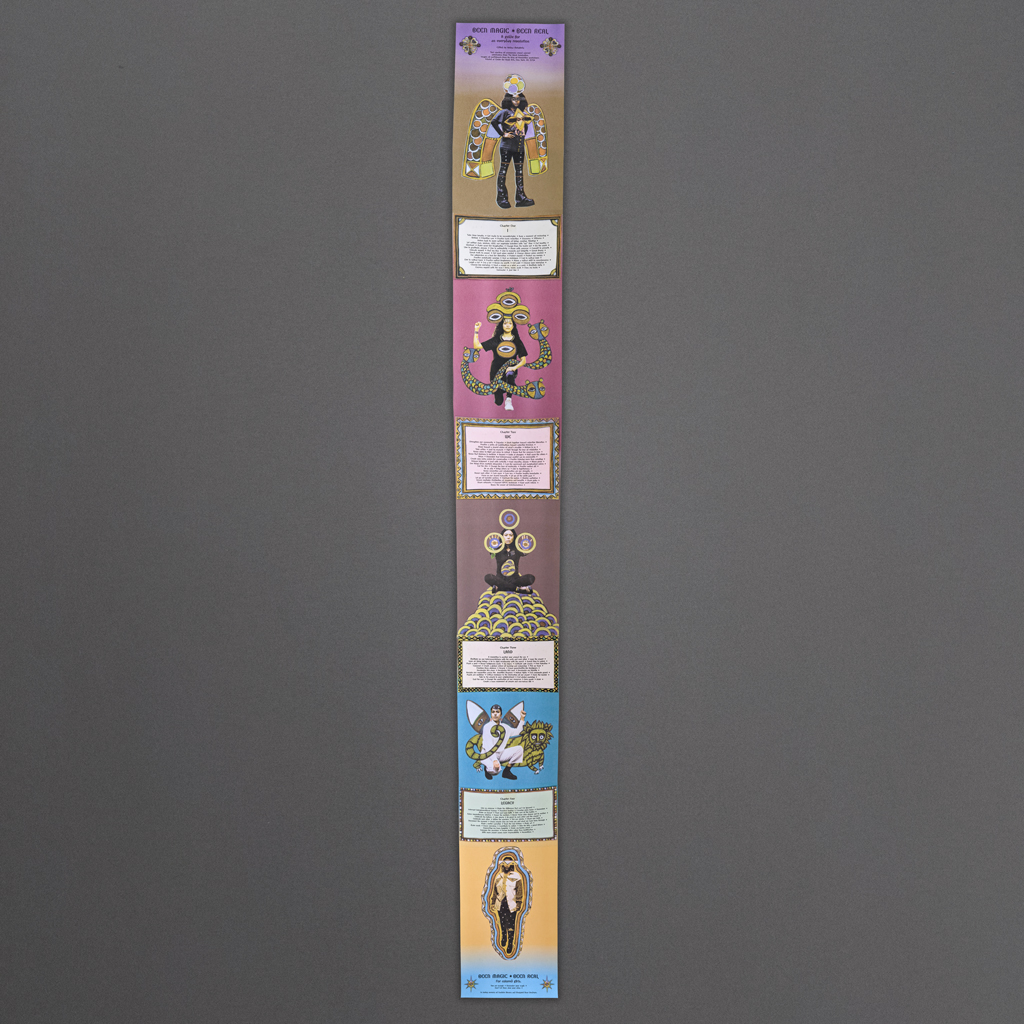
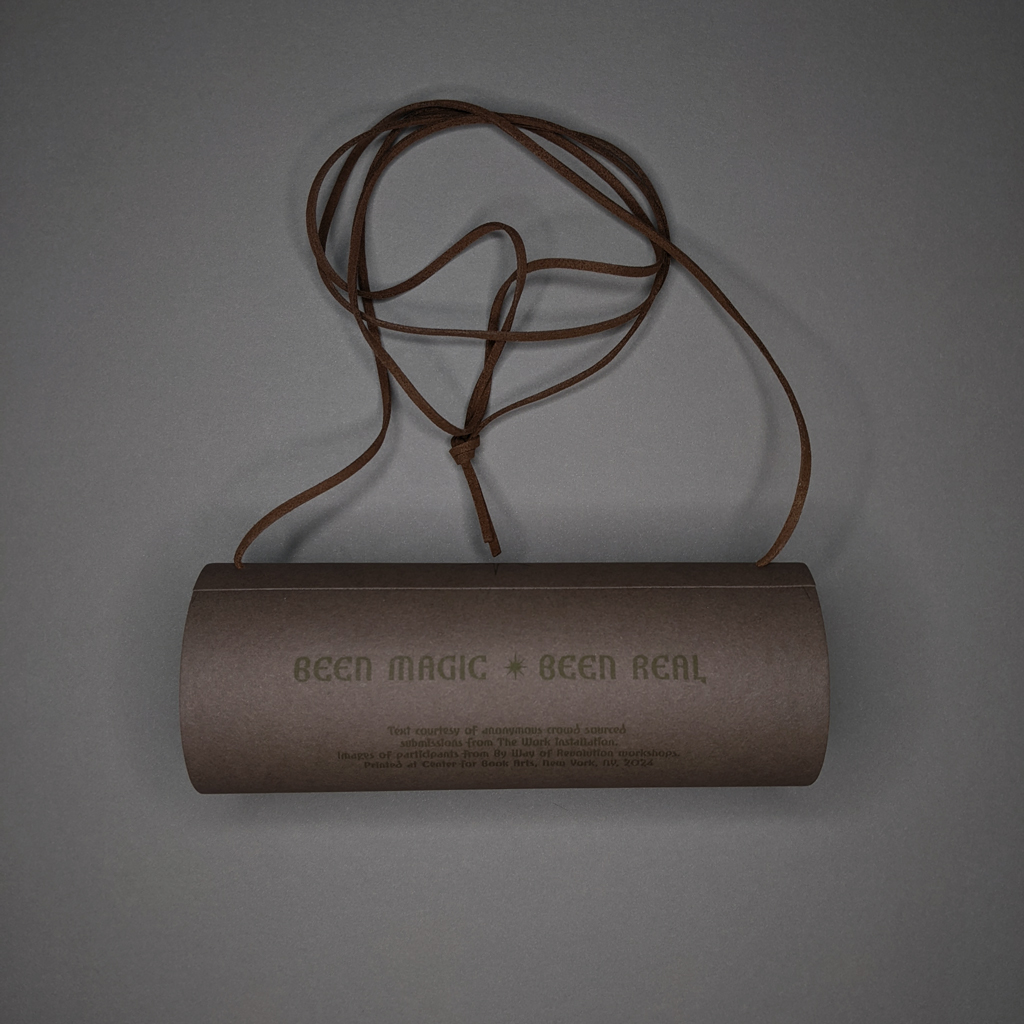
The scroll is enclosed in an open paper tube with a printed title and a leather cord. (Traditionally, healing scrolls were carried or worn on the body, and many that survive have a leather cord.) The scroll is easily removed from, and returned to, the tube, but readers who don’t plan to hang their scroll may want a rectangular box for long-term storage. At seven inches wide, the scroll itself can be managed on a lap or tabletop. It has four blocks of text divided by five images, and a reader can comfortably keep these pairs of text and image open together. To see the entire scroll at once, a reader needs a partner, a paperweight, or some way to display it on a wall.
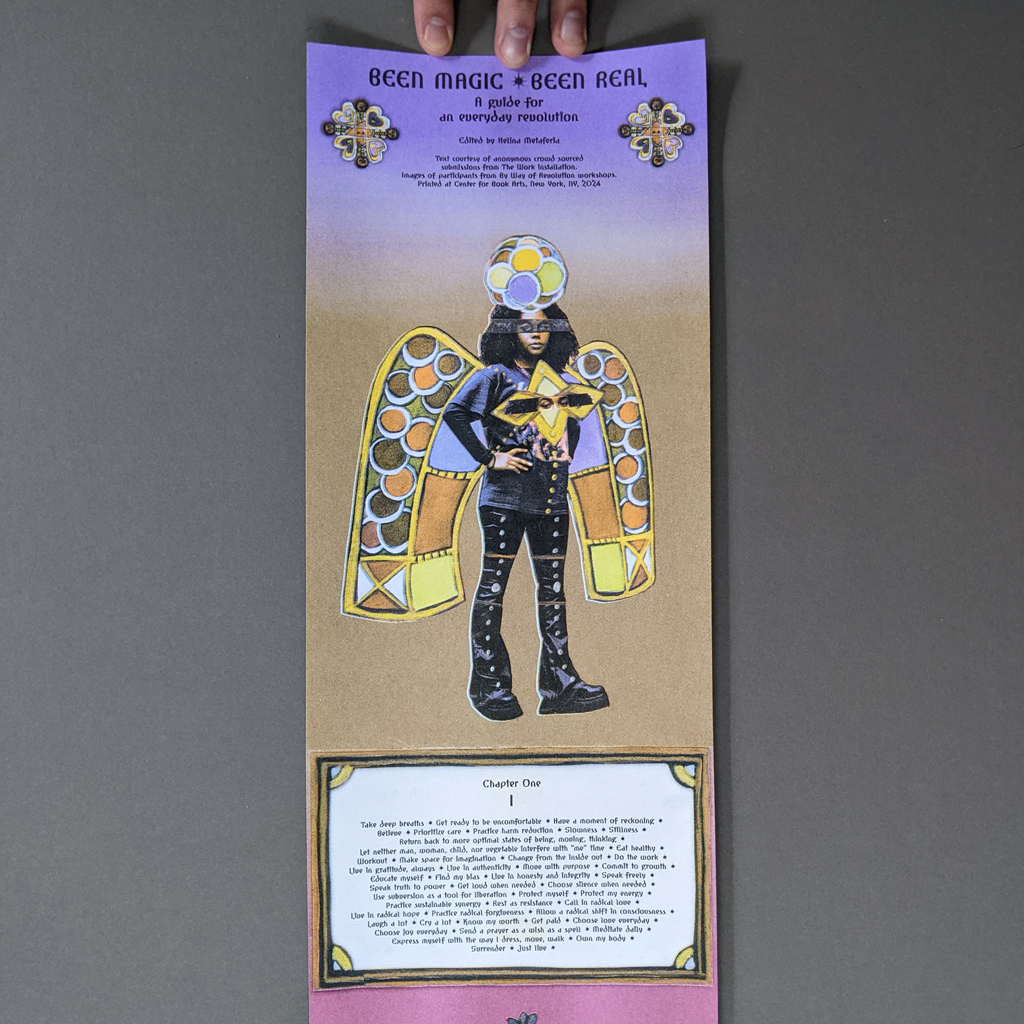
Each block of text is a separate chapter — I, We, Land, and Legacy — and contains a litany of short phrases offered in response to the question “What is your everyday revolution?” These range from pithy sayings you might find on Instagram (activist slogans, self-help affirmations, and so on) to more individual expressions. The phrases are sequenced with an ear for rhythm and variety, giving the overall effect of a poem or a prayer rather than a word cloud at a team-building retreat. If the most meme-ready responses elicit a shrug or an eye roll, others contextualize, supplement, or even contradict these. The point is that each participant has their own revolutionary practices, and there is no one right way. This multiplicity is baked into the syntax of the first two chapters, where the titular pronoun can be appended to the beginning of each phrase: “I…prepare to be uncomfortable” or “we…work together toward collective liberation.” Instead of telling the reader what to do, the scroll offers dozens of examples that people already practice, some concrete and others more abstract.

Just as the text is stitched together from many sources, the imagery is digitally collaged. The iconography hews closely to traditional healing scrolls: eye motifs abound, and the boxes of text are framed by geometric patterns. However, instead of angels or saints, the portraits are of ordinary people posed like heroic, revolutionary figures. And, instead of a limited color palette, often only black and red, Metaferia’s scroll is Risograph printed in ten colors, enabling an aesthetic somewhere between vernacular religious posters and internet art. The images are detailed enough to be read alongside the text but retain a graphic quality that works well as wall art. Likewise, each chapter has a distinct color scheme and visual vocabulary, but they coalesce into an attractive overall design when the scroll is fully opened.
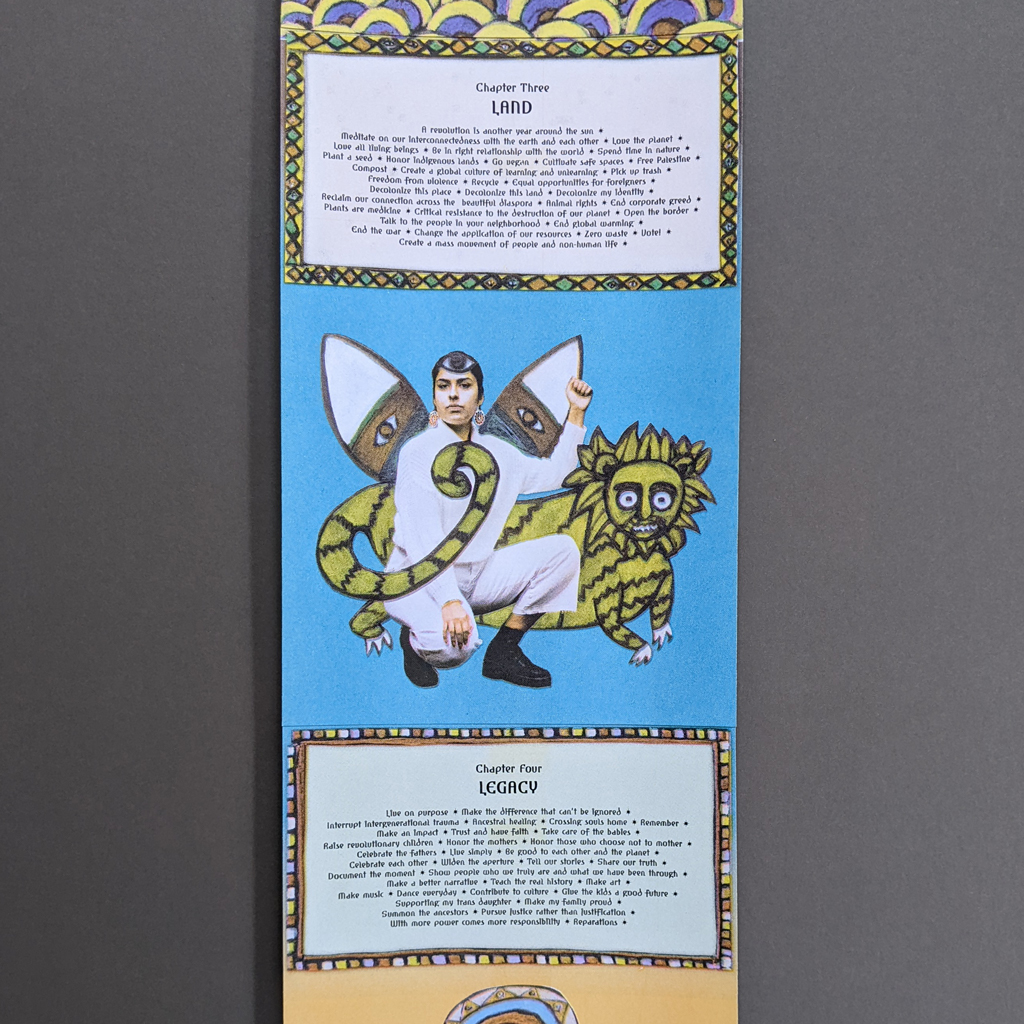
If I am projecting an internet art aesthetic onto the illustrations (and social media sloganeering onto the text), it is because the vertical scroll format now invokes the internet as much as any ancient tradition, and I think it is worth exploring, even stretching, these parallels. On one hand, social media is emblematic of the gaze that Metaferia seeks to counter: the heteropatriarchal male gaze, the colonial gaze, the glazed over, disengaged doomscrolling of the attention economy. Let’s call this the evil eye. The eye motif, which traditional talismanic scrolls use to return the gaze of the reader and banish the demon that has afflicted them, is found throughout Metaferia’s version. So, on the other hand, there is the reciprocal gaze, the healing power of being seen. Social media too often falls short of this, but it is the sort of mutual recognition that Metaferia’s workshops aim for, and which resounds in the book’s portraits.
To continue the comparison, just as traditional healing scrolls relied on ritual, Been Magic * Been Real is incomplete without its social context. It is an interesting artists’ book in its own right, but its power comes from the trust and hope that motivate Metaferia’s interlocutors. Even as the text’s direct address absorbs the reader in their individual experience, the portraits make present the contributors who collaborated on the text. This dialectic of I and we, of consciousness-raising and collective action, is just one of the tensions sustained throughout the book, showing the complexity of healing and revolution. Is it time for reflection or action? Do we act locally or globally? Do we listen or lead? Been Magic * Been Real doesn’t offer answers; it invites the reader to look, and it looks back. Its gaze affirms, encourages, and obligates the reader.
 Artists’ Book Reviews
Leave a comment