
The Streets Are Very Quiet
(You Look Like The Right Type, Book 2)
Mark Addison Smith
2022
Printed at Fort Orange Press
448 pages
9 × 6 × 2 in. closed
Smyth-sewn, case-bound
Digital printing inside with foil-stamped cover
First edition of 150

The Streets Are Very Quiet belongs to a series of daily drawings titled You Look Like The Right Type, which Mark Addison Smith began in 2008. It is also a COVID project. The book therefore captures the uncanny combination of continuity and disruption that characterized life after March 2020. The same tension is inherent in Smith’s project: each day he jots down a phrase he overhears, then renders it in expressive hand lettering, sometimes accompanied by illustration. Snatched from the flow of conversation, these specimens of speech are captured on Bristol board like butterflies pinned in a shadowbox. So too does the book interrupt Smith’s yearslong project with a front and back cover. In this case, the pause is welcome. The Streets Are Very Quiet is a playful yet sensitive archive whose importance will only grow as 2020 recedes from public memory.

The book’s archival function is enhanced by its hardcover heft. It is durable, bordering on monumental. The selection of 365 compositions is also significant, although they come from the early months of the pandemic, not a complete calendar year. No longer able to eavesdrop in public, Smith arranged online conversations with strangers to continue his daily drawings. He explains his process in the book’s foreword and includes an appendix with follow-up interviews at the end. Keeping with his usual method, he transcribed the conversations rather than recording the audio. Nevertheless, most of the texts in The Streets Are Very Quiet are longer than the serendipitous phrases from the pre-COVID project. One result is that the conversations span multiple pages, helping to invest the reader and propel them forward.
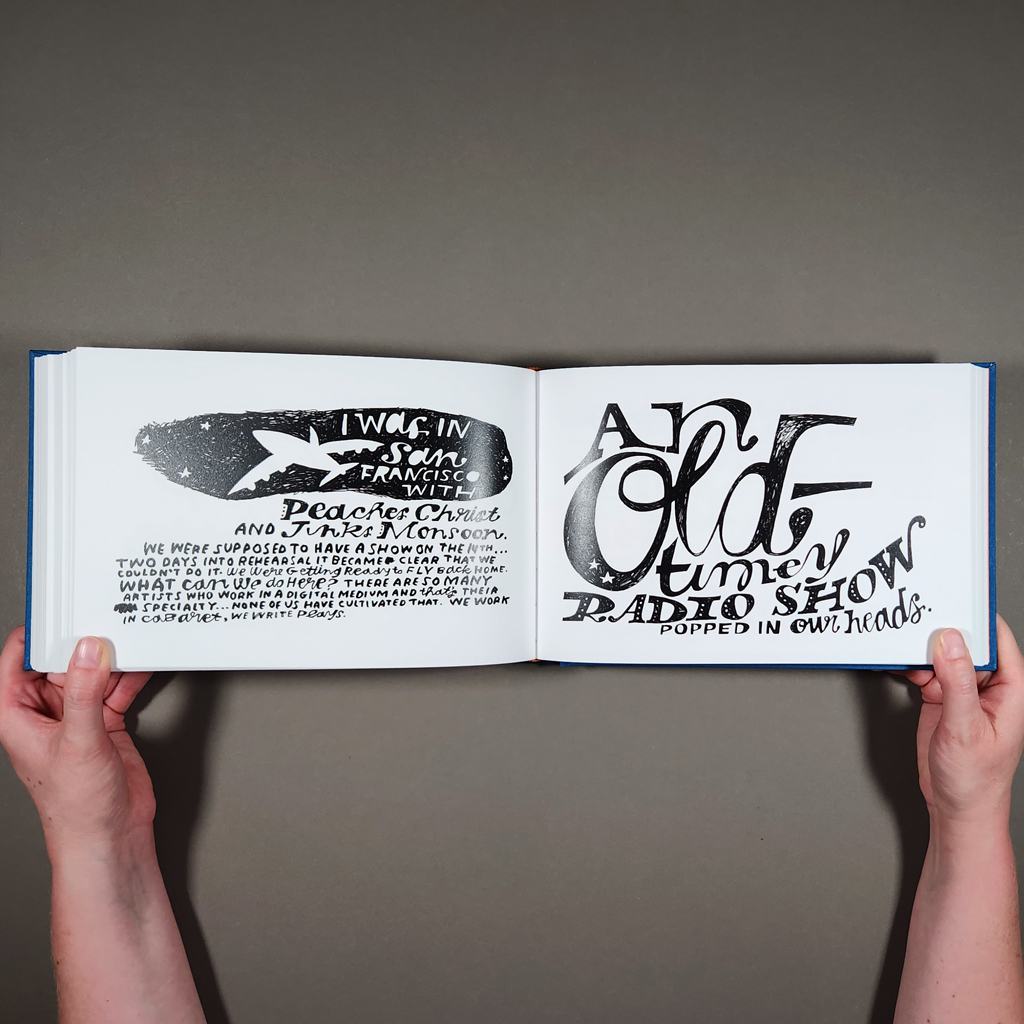
There are still plenty of stand-out phrases, though. There is still absurdity and serendipity. After so many years, Smith knows a good quote when he hears it — and he knows how to visualize it. If anything, the longer passages showcase his subtle translations of volume, rhythm, tone, and attitude from sound into image. Paradoxically, the reader gets a better sense of the speaker’s voice and also the artist’s hand. Smith’s lettering strains under the amount of text he works with each day. Even before COVID, his commitment to You Look Like The Right Type was impressive, but in The Streets Are Very Quiet, he no longer makes it look easy.
Of course, appearances can deceive. Smith conveys spontaneity, but the compositions are always well resolved. In another balancing act, the line drawings are just good enough; they hold up to the lettering without overpowering it. The lettering is the main event, but the illustrations add depth and complexity to the book. Outlines overlap and intersect, especially in human figures, visualizing the central theme of connection. Yet the figures seem insubstantial; not fragile so much as fleeting.

It may seem surprising that You Look Like The Right Type can speak so eloquently to pandemic isolation when the project is rooted in public spaces and interpersonal exchange. However, the strange mix of mundane observations and existential questions that characterized the stay-at-home period fits perfectly with the decontextualized clips of conversation that Smith illustrates. If artists notice details that others ignore or ask big questions without hoping for answers, then sheltering in place made artists out of many people in the spring of 2020. Not that we just sat around thinking: The Streets Are Very Quiet reminds the reader just how much there was to do — and how much pressure there was to do something, anything — during those early months. The reading experience replicates that feeling of being pulled in so many directions while stuck in one place, only now it is enjoyable.
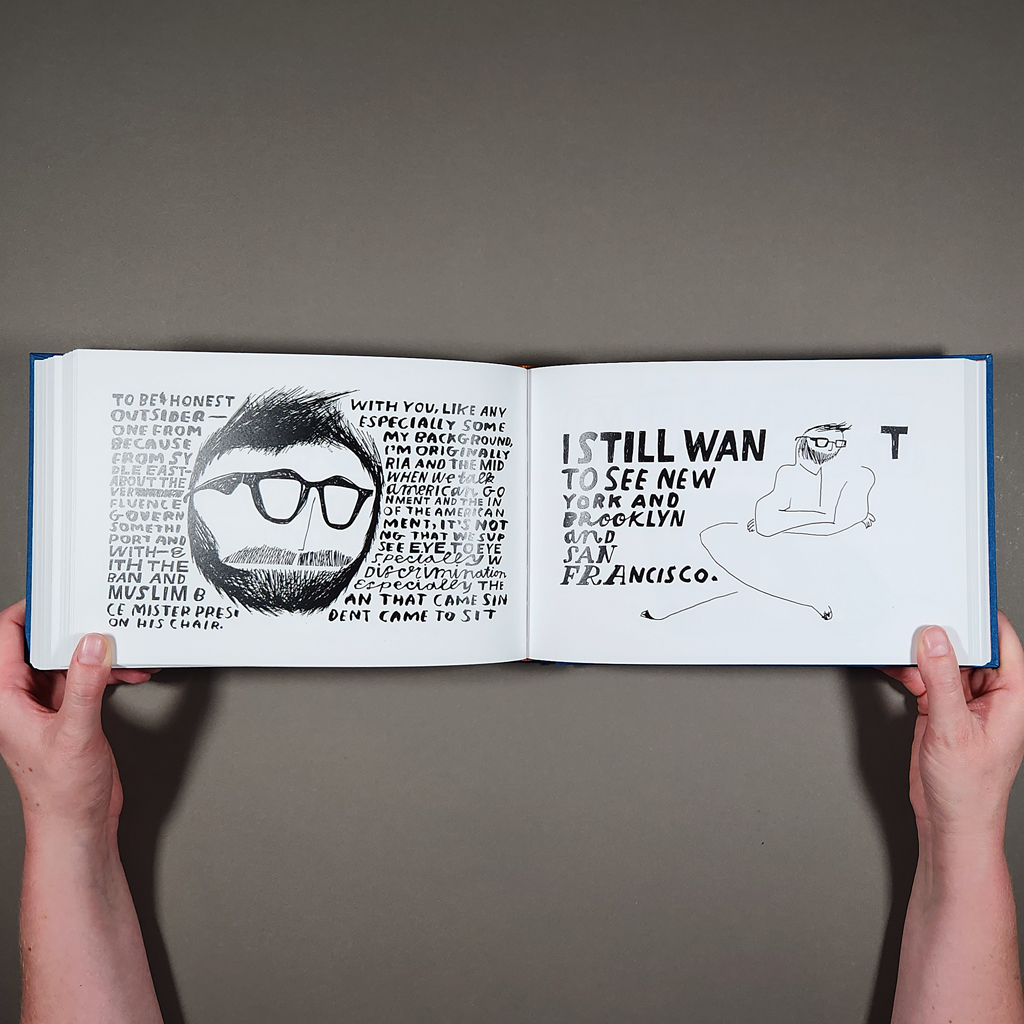
From the beginning, You Look Like The Right Type was as much about isolation, or at least separation, as it was about connection. The texts are unguarded, but the speakers remain strangers — even to Smith. Ironically, it was only through the pandemic that the project evolved from eavesdropping to dialogue. Smith excels at visualizing voice, but his very ability to cut and polish a piece of conversation only removes it further from its origin. His compositions are bittersweet, like a stunning image on a postcard that can only wish you were there. That begins to change with The Streets Are Very Quiet. Yes, we feel the pain of separation and confront the limits of mediation, but we also remember the consolation of connection.
 Artists’ Book Reviews
Leave a comment