
In the Stitch
Chika Ito
2026
12 pages
4.13 × 5.83 in. closed
Sewn-pamphlet with unbound card, needle, and thread inserted; enclosed in a belly band
Inkjet printing
Edition of 88
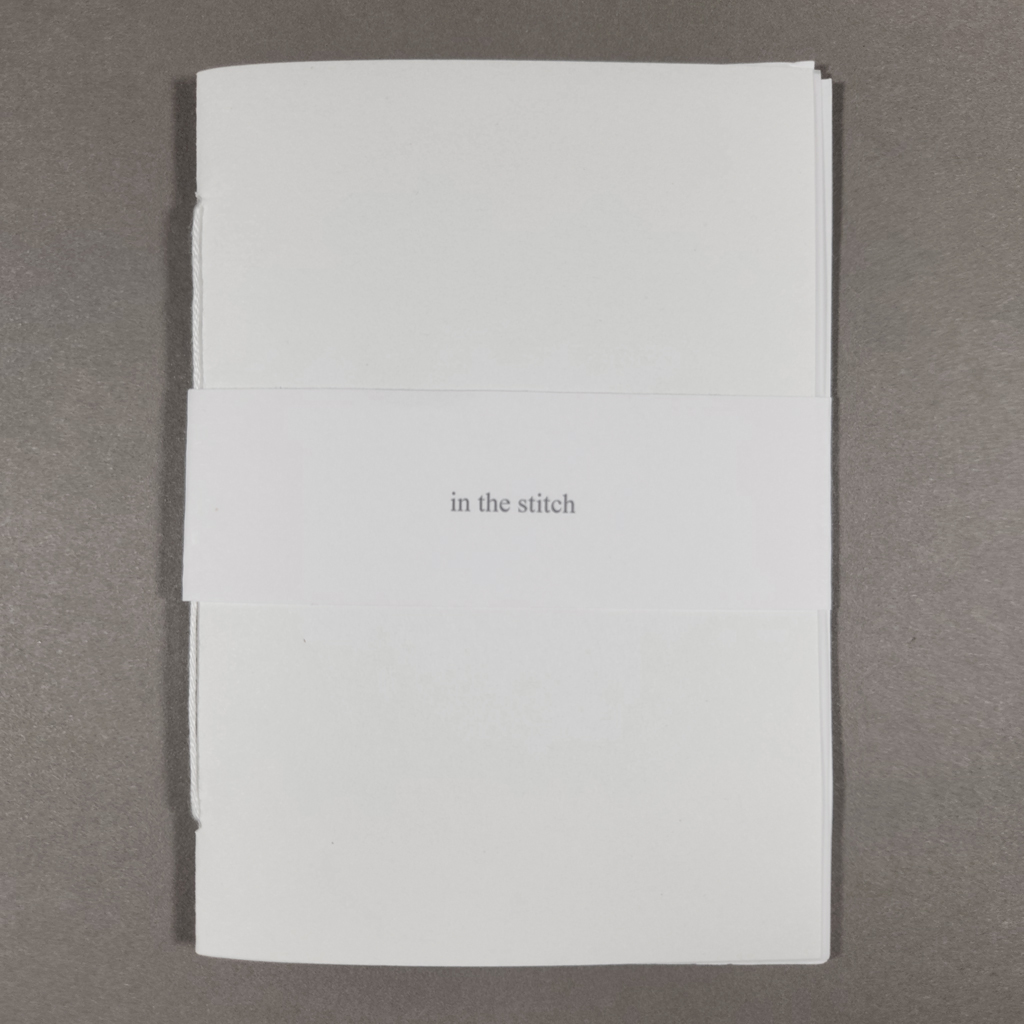
In the Stitch is a slim yet surprising pamphlet by Chika Ito. The artist, who works as a paper conservation lab technician and makes her own inks, can wring maximum impact out of minimal materials. Indeed, with only one line of text, the materials do much of the work in In the Stitch.
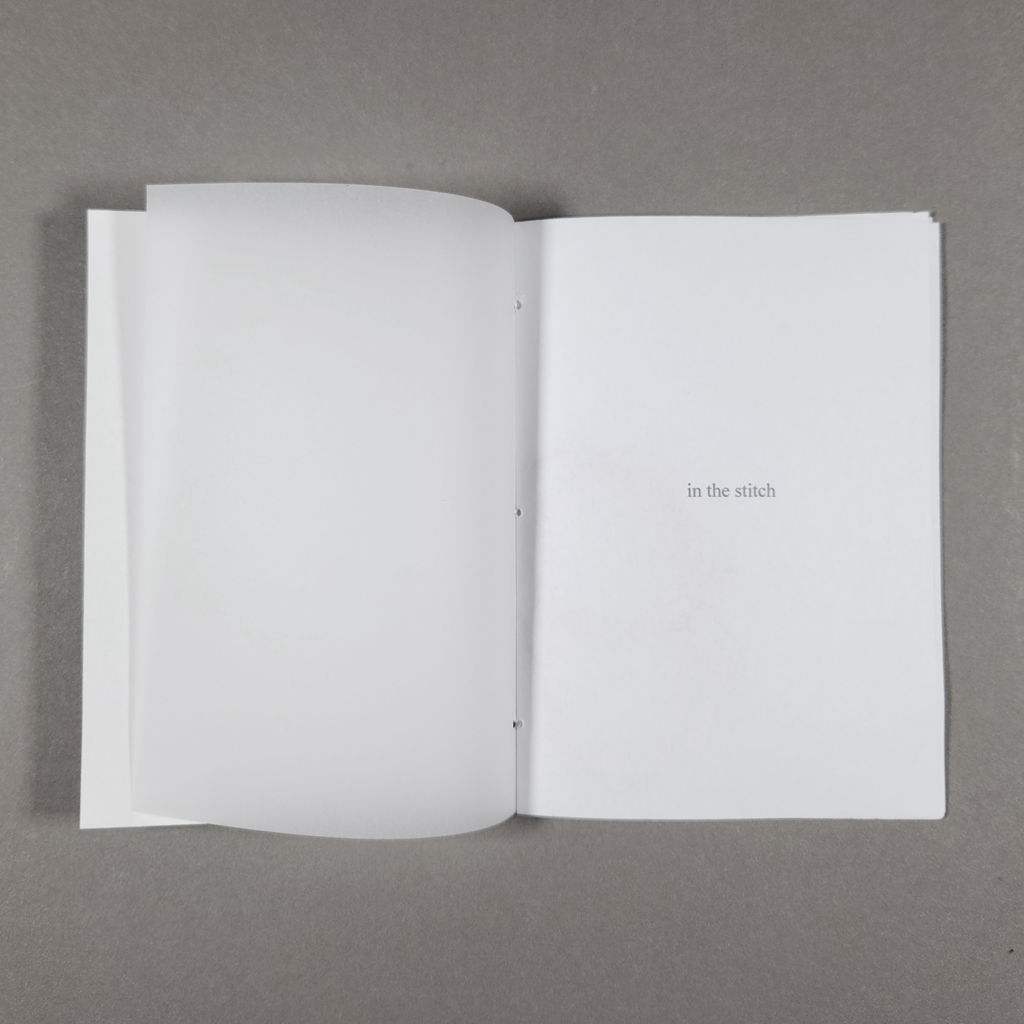
The book’s title is set lowercase and printed in gray on a paper belly band, which reveals a blank white cover once removed. The first opening is also blank, but the outside signature is a translucent drafting vellum, showing through to the title printed in the second opening. Having thus eased the reader in, the next opening is rather more surprising. The turn of the page reveals a tapestry needle, already threaded with red embroidery floss, stabbed through the recto. Remarkably, these materials are so light that the thin paper not only supports but conceals them. The next opening contains another inclusion: a card whose corners are tucked into slits in the recto. The card is plain white but punched with seven holes, arranged in a hexagon with a center point. The next spread is, again, blank, followed by a colophon.
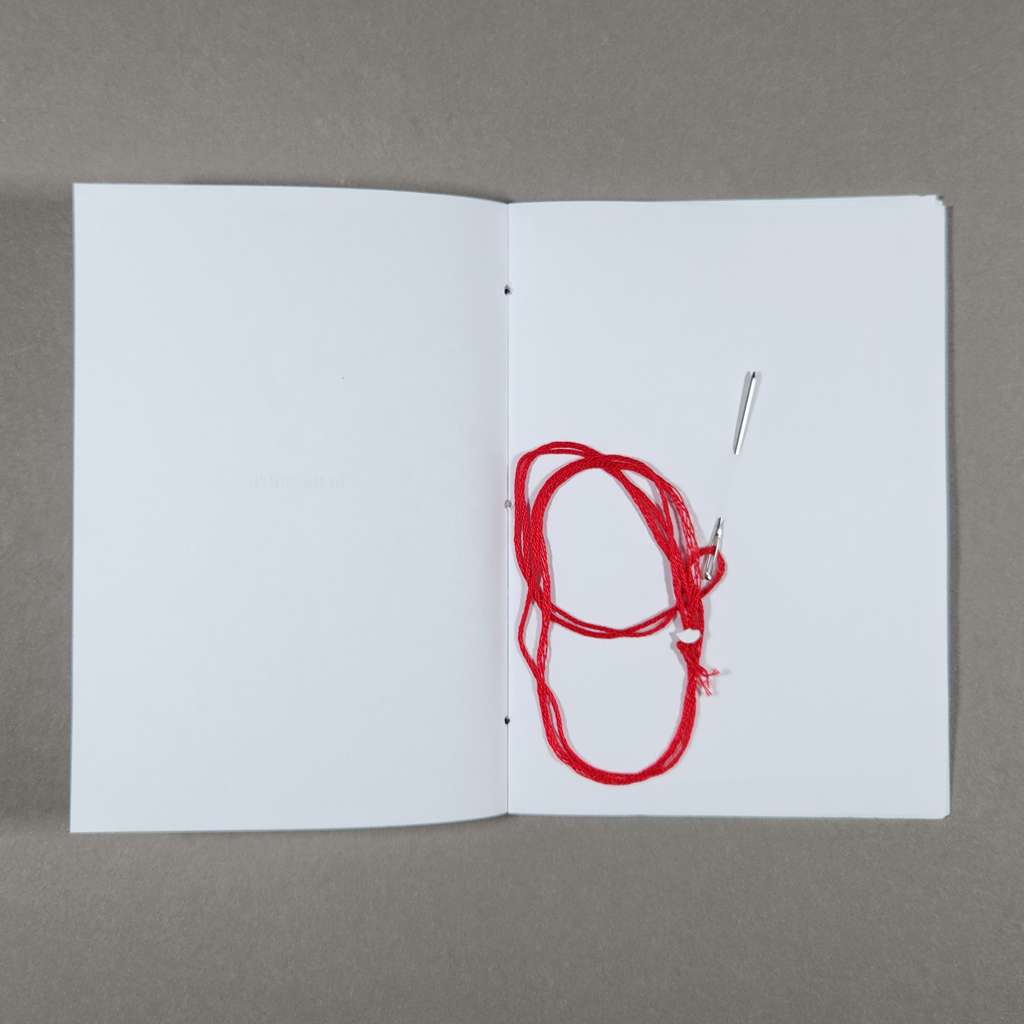
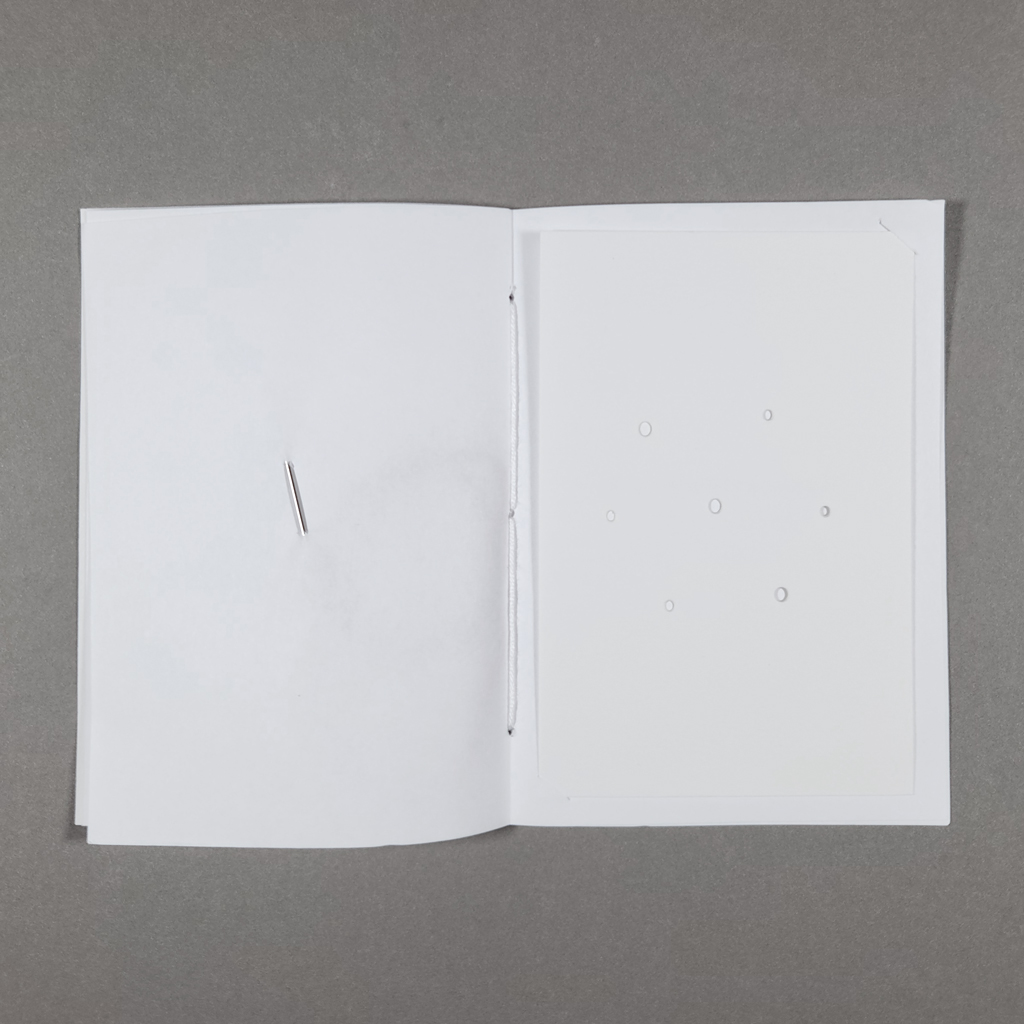
The initial reading experience — if one can call it that — is quite brief. But, if one takes Ito’s implicit invitation and removes the inserted materials, a final surprise is printed behind the hole-punched card. A single line of text reads: “life will be reborn in you again.” As the colophon explains, the book is inspired by Palestinian poetry and embroidery. The phrase is the final line of the poem “Ever Alive” by Fadwa Tuqan, who has been called the mother of Palestinian poetry. Read through Tuqan’s poem, the needle and thread take on new meaning. The needle, which punctures the book’s page, can also be used to sew together, to repair. (The pamphlet itself is bound in a similar embroidery floss, only white.) Red, the thread evokes blood: violence, life force, and inheritance.
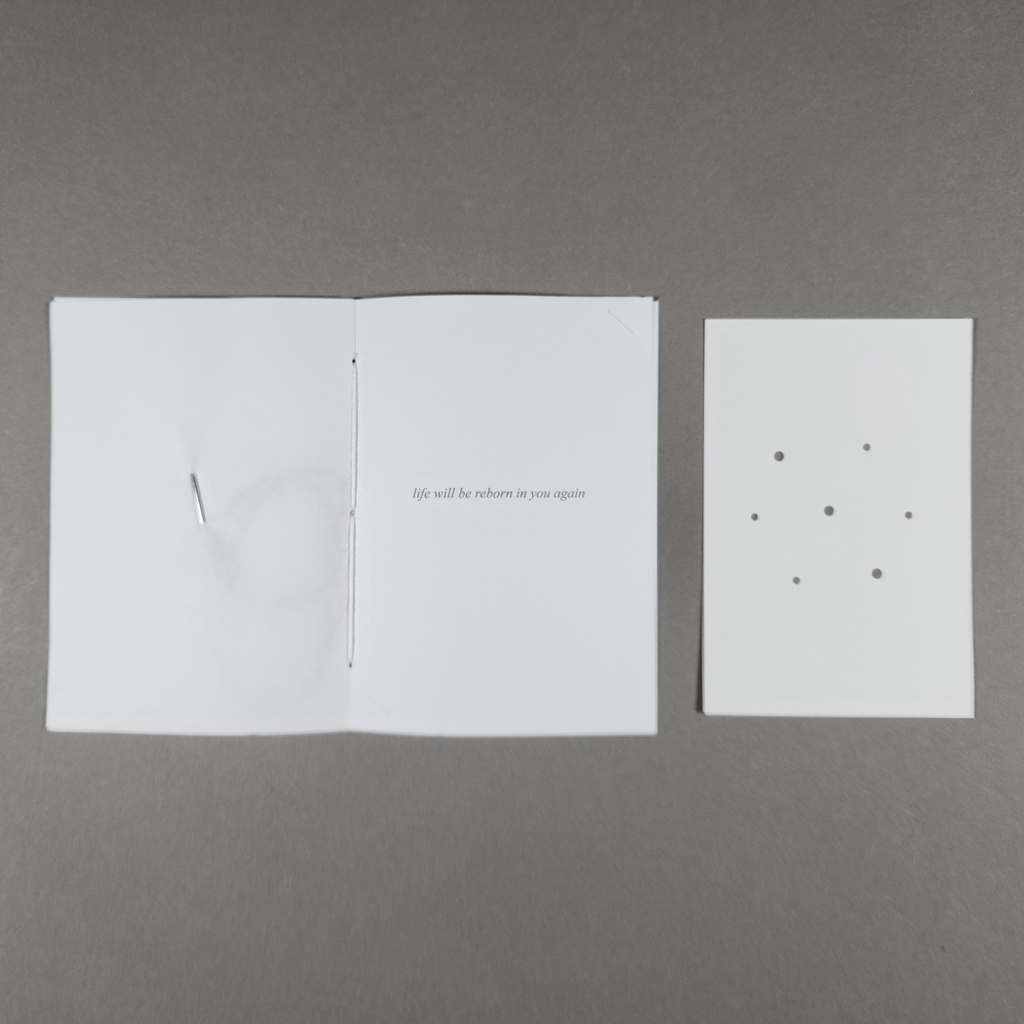
Embroidery, tatreez in Arabic, is itself a form of inheritance. UNESCO has recognized tatreez as part of Palestinian cultural heritage. In this centuries-old tradition, flowers are among motifs that symbolize rebirth and hope, and these could perhaps be produced using the hole-punched card as a template. Or maybe one could make the fishnet pattern in a classic keffiyeh. That uncertainty is the point; the reader must decide what to make of the many possible permutations. This open-endedness is a longstanding interest of Ito’s. She understands the book as an interactive medium that guides but does not control its reader.
Likewise, embroidery embodies the tension between freedom and constraint. Feminist theorists and artists, for example, have reclaimed the stitch. They have recovered ways that needlework could allow for creativity and expression, even as it disciplined middle-class girls for marriage and motherhood — and lower-class women in garment factories. The stitch has been theorized as a seam, something that brings together two other, separate things. As a mode of mediating difference, the stitch therefore joins the cut and the fold — two other material metaphors so ably embodied by books.
Whether the stitch is about resisting oppression, suturing wounds, or connecting people across divides, the resonance with Tuqan’s poetry is clear. As Palestinians suffer under war and occupation, the question of whether we can break out of established patterns is urgent. So too is the need to preserve cultural heritage, as Ito does by reimagining tatreez, in the face of concerted campaigns to delegitimize or outright erase whole cultures. Urgent, yes, but In the Stitch doesn’t tell the reader what to do. Its blank pages are less a mirror than a projection screen. In the Stitch demands what the reader already knows is necessary.


Leave a Reply