Artists’ Book Reviews

Artists’ Book Reviews

Monthly reviews and occasional interviews

  • Reviews
  • Interviews
  • Submissions
    • Subsidized Submissions
  • About
    • FAQ
  • Contact
  • Email Newsletter
  • Browse Books
    • Title
    • Author / Contributor
    • Editor
    • Date Published
    • Publisher
    • Publication Format
      • Monograph
      • Periodical
    • Genre
    • Print / Production
    • Medium
    • Binding
    • Container
      • Belly Band
      • Envelope
      • Slipcase
      • Tube
    • Structure
  • Plant Out of Place

    Plant Out of Place
    Sarah Nicholls
    2019
    Brain Washing From Phone Towers
    brainwashingfromphonetowers.com

    4.75 × 8.75 in.
    12 pages
    Binding: French fold accordion, stitched into a cover
    Letterpress and linocut
    Edition of 250

    Plant Out of Place front cover

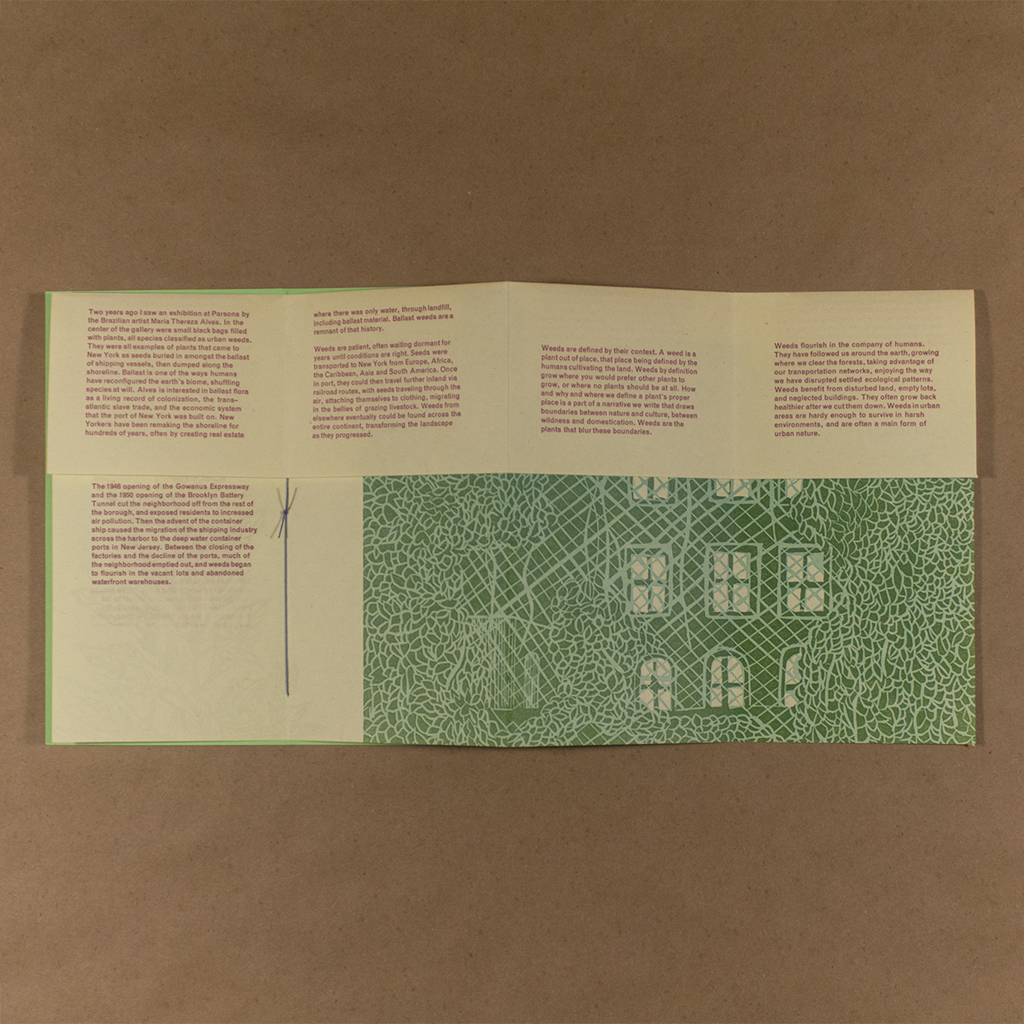
    Despite its unusual format, Sarah Nicholls is emphatic that her work Plant Out of Place is a pamphlet. In fact, Plant Out of Place is one of a three-part pamphlet series about weeds. In this case, weeds provide an access point for Nicholls to share the history of Red Hook, Brooklyn through the lens of contemporary issues like climate, migration and racial inequality. The pamphlet’s inside pages are constructed from a single sheet of manilla-toned paper, which is sewn into a green paper cover with a simple three-hole stitch. The structure is a French fold accordion. It has four panels with a horizontal fold creating a flap across the top half, like an awning. One must open this fold to read all the text, and doing so playfully reveals the top of a large linocut illustration that takes up about half of the front side of the inside sheet. The back side of the sheet is similarly divided between text and image.

    Plant Out of Place inside French fold

    The text guides the reader through pamphlet’s structure. The content begins on the inside cover, continues onto the recto and then traverses the flap left to right across all four panels of the accordion. Then the reader lifts the flap and the text continues on the far left and proceeds across the four columns of the now-single page. Nicholls’ prose is informal, but informational. Her point of view as a Brooklyn resident appears throughout the text, with references to “here” rather than “there,” and detours into first person. The reading experience is something like stumbling across a brand new wikipedia article that was passionately written by a single contributor and retains its idiosyncratic charm. Nicholls progresses from an investigation of ballast weeds as a trace of colonization and slavery (inspired by the artist Maria Thereza Alves) into a look at food, housing and education in Red Hook, all through its plant life. The pamphlet covers centuries of history and looks forward toward an uncertain future.

    The type is set in a legible sans-serif face and letterpress printed with a kiss impression. It is not precious or ironic; Nicholls is interested in letterpress as a viable production method with various advantages that, for her project, outweigh its limitations. The text is printed in a deep magenta that pops against the green illustration.

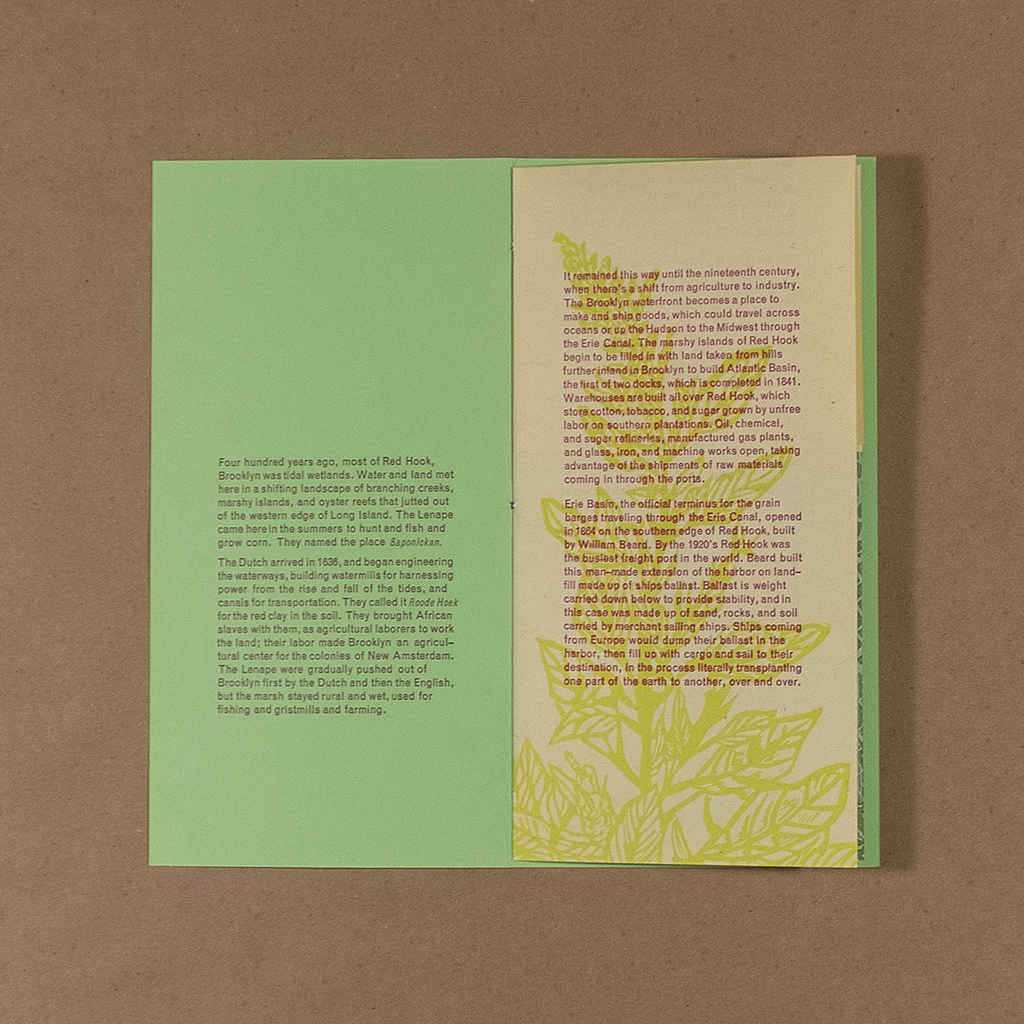
    Plant Out of Place open inside

    One illustration is a tightly cropped rendering of a plant, printed in bright green behind the text on the recto of the first opening. The remaining three, including the cover illustration, are an interesting mix of positive and negative mark-making. They are not quite white line prints, and the push and pull flattens the picture plane and emphasizes repeating textures like the leaves of vines and the chain link fence that supports them. The two inside images are reduction prints, but in one case the lighter color renders the foreground while in the other image it fills the background. This reversal further emphasizes the vibrating quality of the images, which recede and rush forward in turn as the eye moves. There is a sense of urgency in the imagery that seems appropriate for the text – not only the rapid-fire style of the historical content, but also the alarm raised about the threat of future climate catastrophe.

    Plant Out of Place first opening

    This sense of urgency pervades the entire work. The content begins immediately on the inside cover, as if the conventions of book design (end paper, title pages, and so on) would simply get in the way of an important message. This design decision supports Nicholls’ contention that Plant Out of Place is a pamphlet, and demonstrates her ability to harness structure and composition to serve the content. The text inside and underneath the folded flap adds to the feeling that the text is simply too important to be contained. Its spread seems suitably weed-like. As each new surface is revealed, the reader finds that the text has preceded them. The reading experience is a game of catch-up, discovering the history and learning how it resonates in the present.

    Another factor that contributes to the pamphlet’s intensity is that it is self-contained. There are no footnotes or sources, no hyperlinks to divert the reader’s attention down any number of related rabbit hole. Plant Out of Place is letterpress-printed from handset metal type and exists only in printed form. Reading is an act of trust, a suspension of cynicism. Sure, the imprint is named “Brain Washing From Phone Towers,” but Nicholls’ name and contact information are printed on the back cover. The pamphlet is an exercise in personal accountability in an information landscape curated by crowdsourcing.

    Plant Out of Place open outside

    Plant Out of Place shares this ethos with the larger Brain Washing From Phone Towers publishing project. The pamphlets are intended to interrupt the flow of daily life, to find readers through serendipity. Copies are sent randomly among members of a mailing list, a loose network of friends, friends of friends and strangers. Even the subscription model operates within the gift economy; the subscriber nominates a second person to receive free pamphlets. In place of metrics, feedback, likes and tags, the relationship between author and reader is mediated through the publication itself. Plant Out of Place shows the potential for the artist as publisher to leverage direct, focused, anonymous offline communication to address important issues and grapple with uncomfortable histories.

    Levi Sherman

    August 15, 2019
    Review
    2019, artists’ book, book art, book review, Brain Washing From Phone Towers, Documentary, Folded, Letterpress, Pamphlet, Pamphlet Stitch, Periodical, Red Hook, Relief Print, Sarah Nicholls, Text, weeds
  • the THERE, THERE quarterly (Volume One, Issue One)

    the THERE, THERE quarterly, Volume One, Issue One
    Travis Shaffer
    Featuring Zora J. Murff, Cian Oba-Smith, and Terrance Purdy
    2019
    theretherenow.
    www.theretherenow.com

    10 × 12.5 in.
    18 sheets
    Unbound, gathered in a belly band
    Risograph

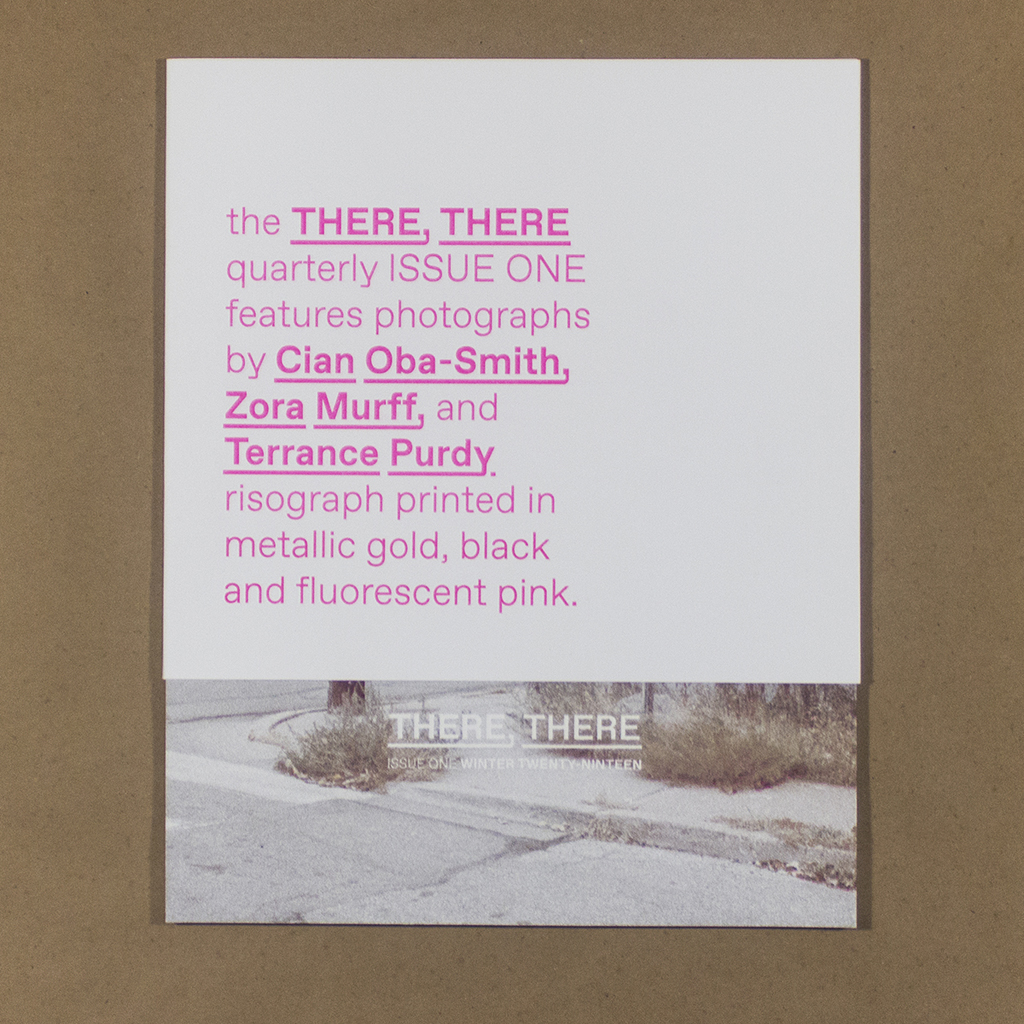
    THERE THERE Quarterly, Issue 1, Cover

    the THERE, THERE quarterly is a new photo publication from Travis Shaffer’s imprint, theretherenow. Volume One, Issue One establishes the format: work by three photographers is Risograph printed and gathered in loose sheets by a belly band that practically qualifies as a slipcase. It is published in a limited edition of one hundred copies. Drawing on photobook and portfolio traditions, the THERE, THERE quarterly argues for a re-evaluation of the status of the photo print and limited edition. Mediation supplants mimesis, challenging alike the photomechanical facticity of a darkroom print and the endless pursuit of higher resolution in digital photography. Shaffer makes his case through the publication’s structure, layout, and print production. Print production is especially important to this exploration, with the Risograph serving as a sort of lodestar – commercial and artistic, analog and digital, unique and multiple, not yet pigeonholed into a single art practice or academic discipline. In this interdisciplinary territory, the THERE, THERE quarterly poses exciting questions for photography.

    The issue consists of seventeen prints with photos on the front and numbers on the back. The layout is such that the numbers aren’t needed to keep the prints in order, but they do let the reader match the images with their creator. Issue One features Zora J. Murff, Cian Oba-Smith, and Terrance Purdy. A bio of each artist is included on an eighteenth sheet with the image list and, on the reverse, a colophon and editorial statement from Shaffer. The belly band containing all this is boldly printed with the title, artists and ink colors (this text is fluorescent pink).

    Though the prints are numbered, the photographs are laid out across two sheets each, challenging the status of the photographic print as a unit. Like any good artists’ book, the content and structure guide the reader toward a suitable approach – in this case viewing two prints side by side, with a discard pile off to the side. The reading experience is fresh but familiar, somewhere between a portfolio, a book, and a horizontal scrolling portfolio website. The images are split across each sheet differently, creating a set of unique and asymmetrical compositions. The result propels the reader forward since the next sheet must always be viewed in order to complete the image.

    THERE THERE Quarterly, Issue 1, Inside spread 8

    This amplifies both momentum and meaning, creating three relationships in each “spread” of two sheets. The central image, synthesized across the “gutter” of both sheets, relates to the image fragments on either side, which also relate to one another. This simple device provides a dynamism not available to a conventional portfolio with images viewed one at a time. It also requires that the sequence is considered temporally and spatially, like a bound book. The spread of sheets eight and nine illustrate the effect well: a man’s head, facing left, exits off the left while a horse’s head, looking the same direction, enters on the right. The interplay of these images frames the central scene: two figures in front of a brownstone seen from across a desolate intersection.

    Like its structure, the publication’s print production exerts considerable influence on the meaning. Shaffer highlights the importance of Risography, placing the colors front and center on the belly band alongside the title and contributing artists’ names: “[R]isograph printed in metalic gold, black and fluorescent pink.” In the back matter, he writes: “The RISO is our campfire. Institutional by design but co-opted by artists. Absurdly analog method of digital printing. Subversively resisting the service to content inherent to the publishing paradigm.” Thus, the quarterly’s print production serves to further challenge and complexify the status of photography and the meaning of publishing.

    In this case, the unusual color separation is particularly well-suited to the content. All three photographers deal with representations of blackness. Representing skin tones with metallic gold, black and fluorescent pink ink seems to speak to the constructedness of race through media, and the history of photographic processes erasing, or at least ignoring, marginal identities. Issue One strikes a good balance between the meta questions – the friction between Risography and photography – and the projects of each artist.

    THERE THERE Quarterly, Issue 1, Inside spread

    The artist bios stand in for an editorial statement, presenting broad lines of inquiry and leaving plenty of room for interpretation. Each artist is concerned with race and representation, but their individual approaches contribute something different to the quarterly. Zora J. Murff contributed photographs from his series At No Point In Between. His work examines the interrelationship between people and their environment, and this project looks at the lasting impact of redlining. He takes on the challenge of representing a catastrophe so slow people barely notice, a stark example of the aesthetic dimensions of politics. The images are melancholy, the tired boredom of a hot summer afternoon. His portraits are more expressionistic, intimate and closer cropped than Oba-Smith’s full bodies and sharp lines.

    Cian Oba-Smith does share an interest in the relationship between people and their environment. His series Concrete Horsemen examines a subculture of black horsemen in urban Philadelphia. By delving deep into this little-known community, he challenges dominant narratives about black men in the US. His jarring juxtapositions show just how shallow are the monolithic racial identities rehearsed in media and political rhetoric. His compositions riff on art-historical equestrian poses, but include dilapidated buildings and telephone poles. Many images have a substantial depth of field to allow these incongruous urban background elements into the portrait. He emphasizes the dreamlike quality of these strange combinations with soft natural light, muted colors, and light exposures.

    THERE THERE Quarterly, Issue 1, Inside spread

    Oba-Smith takes a similar approach in Andover & Six Acres Estates, named for two housing complexes in London. In this case, he explicitly challenges a narrative of crime and poverty that has been constructed around a community. Yet, he does so with the same authentic curiosity, taking the time to immerse himself. Oba-Smith forges a connection with his subjects, and the images – candid, but never voyeuristic – benefit from this practice. The work presents an effective counter-narrative, but does so through open-minded observation.

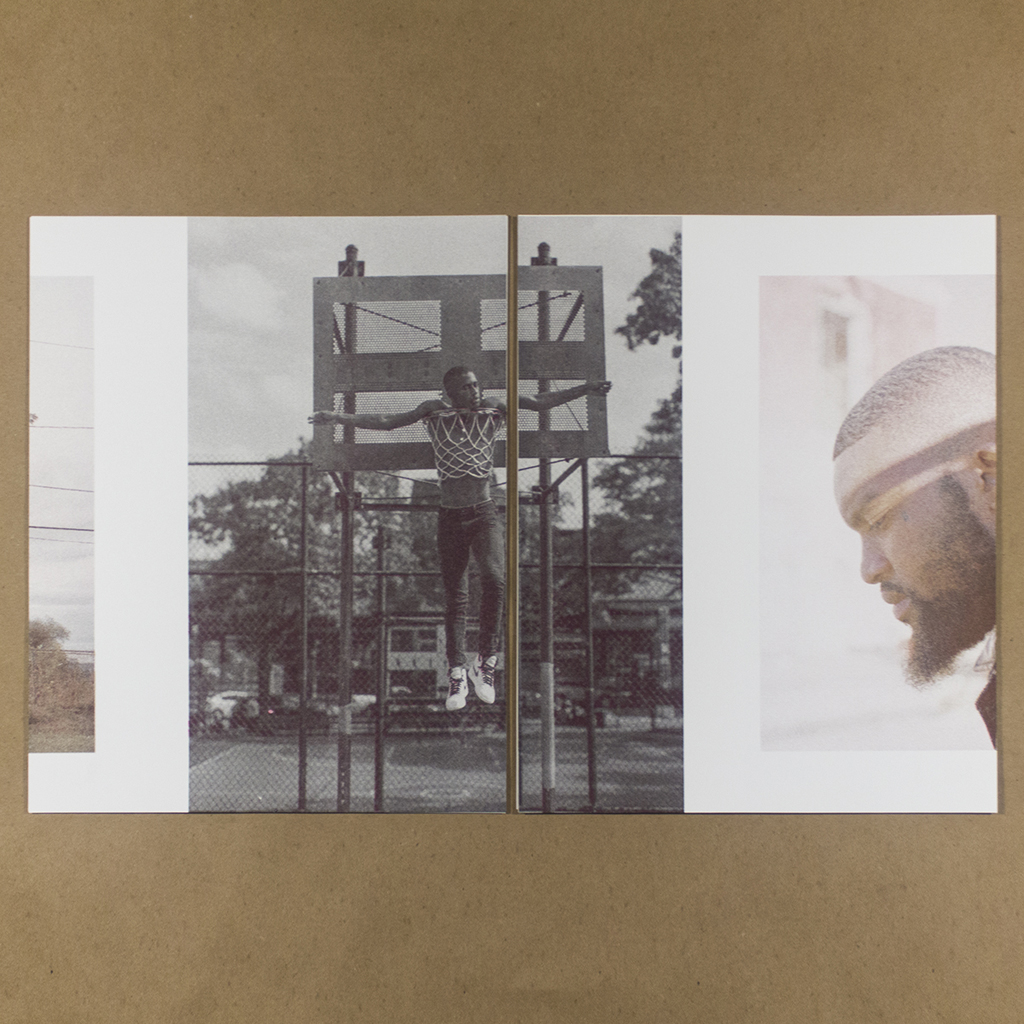
    Terrance Purdy takes a more active role in staging his subjects. He uses expressive lighting and a limited color range to construct moods and metaphors that distinguish the work from the more documentary modes of Murff and Oba-Smith. Skin and hair play a pivotal role in Purdy’s exploration of race and identity, and his visual style seems perfectly calculated to emphasize these elements. The influence of fashion photography is clear in his work, but he approaches fashion and consumption with a critical eye. While Murff and Oba-Smith seek to move beyond stereotypes, Purdy assaults them head on. One particularly arresting image shows the Christ-like figure of a young black man, crucified on a basketball hoop in a part. Purdy expertly draws the viewer’s eye to the point of highest contrast – the subject’s bright white shoes emblazoned with a black Nike swoosh. The image recalls Hank Willis Thomas’ works examining the commodification of black bodies in sport. However, Purdy rejects the stark, empty backgrounds of Thomas’ images and aligns his work with the rest of the quarterly by connecting the human subject to their environment.

    THERE THERE Quarterly, Issue 1, Inside spread

    This thematic through line is supported visually by the unifying effect of the Risography’s coarse halftone and limited color palette. The extent of this effect is easy to assess since the publication’s website features the same image sequence without the mediation of print production. The images are interwoven, with never more than two consecutive photos by the same artist. This integrates the various approaches taken by each photographer and contributes to the rhythm of the sequence. The combined work makes a powerful case for the role of the aesthetic in the politics of race and identity. Through their varying approaches to the broader context of social and economic factors, these three photographers show how artists can contribute meaningfully to conversations about race at this critical moment.

    The tension between Shaffer’s vision and that of the photographers is productive and satisfying. There is enough content for the reader to encounter the images in their own right. The structure and print production eventually take a back seat, especially after the first reading. Nevertheless, the material object maintains a presence. Readers will likely look closely at the color separations, and reassembling the sheets with the belly band engages the reader in a way that stacking prints back into a portfolio or museum box doesn’t. As with any curatorial project, the success will be determined ultimately by the selection of photographers that benefit from a dialog with one another and with the material constraints of the print process. This first issue of the THERE, THERE quarterly sets a high bar.

    Levi Sherman

    July 22, 2019
    Review
    2019, Anthology, artists’ book, Belly Band, book review, Cian Oba-Smith, Periodical, photobook, Photography, portfolio, Risograph, Terrance Purdy, theretherenow, Travis Shaffer, Unbound, Zora J. Murff
  • Lost Houses of Lyndale

    Lost Houses of Lyndale
    Matt Bergstrom
    Design by Mary Clare Butler
    2018
    Fata Morgana Press
    www.fatamorganapress.com/

    8 × 5 in.
    40 pages
    Binding: Single-section pamphlet
    Letterpress cover and offset inside

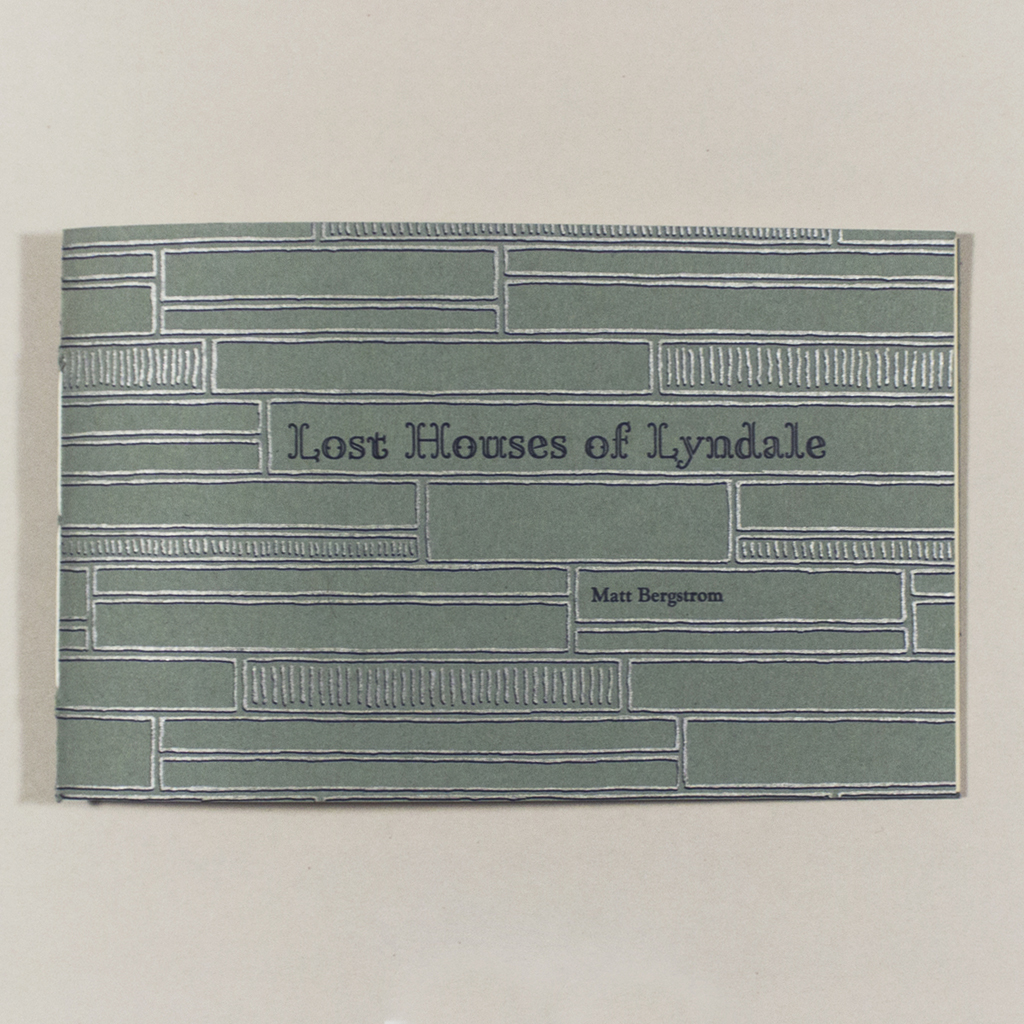
    Lost Houses of Lyndale, front outside cover

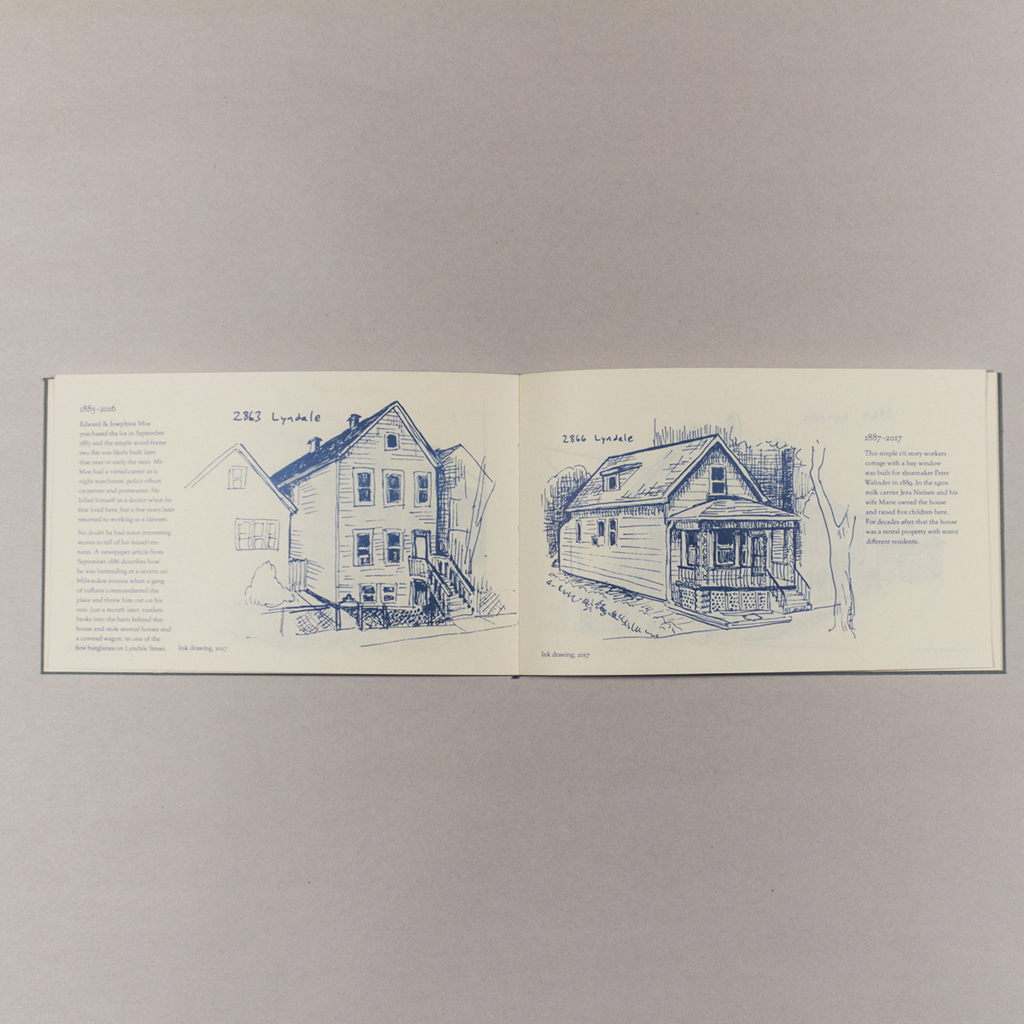
    In Lost Houses of Lyndale, Matt Bergstrom presents a history of all the recently-demolished homes along a two-block stretch in the rapidly-gentrifying Logan Square neighborhood of Chicago. After a brief introduction, the book proceeds with a consistent format: a drawing of each house is paired with a short written history. The entries trace the homes’ various owners, builders, renovations and the like, and occasionally offer charming vignettes of the occupants. Grounded primarily in archival research, these stories are brought alive through Bergstrom’s brisk writing and lively drawing.

    Even beyond the content, Lost Houses of Lyndale is a thoroughly Chicago book. It is a collaboration between two Chicago-based designers (Bergstrom created the content and Mary Clare Butler of Fata Morgana Press designed the book). It is printed offset and letterpress on AB Dick and Vandercook presses, respectively – both Chicago companies. Naturally, the type is set in two faces by Chicago’s own Frederick Goudy. Given Bergstrom’s penchant for history and Butler’s deep engagement with Chicago in her own art practice, it seems unlikely that these details are mere coincidence. 

    Lost Houses of Lyndale, front inside cover

    The book’s design contributes greatly to its success. Each entry comprises the same elements – a drawing with a handwritten address and typed caption and a brief typeset history – yet no two spreads are alike. The drawings vary considerably in proportion, but are masterfully accommodated in each layout. The result is cool, relaxed and balanced. Likewise, the monochrome design and ample negative space help manage the imperfect printing of the AB Dick duplicator. The white space and comfortable margins make the book feel larger than it is. The horizontal, almost panoramic proportions are appropriate for the content and let the single-section pamphlet open easily and lay flat. The inside covers take full advantage of the dimensions, sporting a map of the street with the demolished houses marked. Even the paper choice adds to the message (French “Construction Insulation Pink” and “Construction Steel Blue”). Coincidence? Perhaps, but the subtle tone of the inside pages certainly enhances the reading experience. 

    The book’s sense of balance carries into the writing as well. Bergstrom modulates the extent to which he filters his research for the reader, at time editorializing and riffing. Though Lost Houses of Lyndale is a unified artistic expression, Bergstrom’s presence never obscures the people and houses whose story he tells. The hand-drawn imagery calls attention to the role of author in a way that is especially interesting for an artists’ book that is a work of history. The reader confronts the various forms and degrees of mediation in text and image differently as the book progresses.

    Lost Houses of Lyndale, inside spread 1

    In the linear format of a book, the drawings form a virtual street. The reader strolls down the sidewalk as they turn the page, and can imagine the artist sketching the houses in much the same manner. Before long, this coherent, linear picture is disrupted. The dates reveal that the images must have been drawn from photographs. Slight differences in point of view lend an uncanny feel to the patchwork panorama, which, of course, also excludes all the not-yet-demolished houses in between. It isn’t as though the artist is trying to fool the reader. The street numbers are listed above each drawing, and the map is right there on the cover. Rather, the immersive fiction of the street of demolished homes demonstrates the power of the codex as a technology for selecting and sequencing content.

    Lost Houses of Lyndale, inside spread 2

    The authority of the codex also benefits from the unifying effect of the drawings. A book of archival photographs with their disparate focal lengths and exposures would have an entirely different impact. By drawing, Bergstrom is able to selectively showcase the demolished houses, isolating them entirely or suggesting neighboring houses with a sketchy outline. This erasure interestingly and ironically inverts the true absence that is the very heart of the book. It is easy to minimize how these decisions mediate the subject; the drawings share the “realistic” quality of urban sketching or architectural renderings.

    Where the images present a consistent, timeless unity, the writing emphasizes change. The historical descriptions document the many generations and families that pass through a single century-old home. The houses themselves evolve, too. Bergstrom notes renovations and additions, comparing archival photos and descriptions to recent documentation. There is a clear passion for Chicago’s unique architectural history in these profiles of workers cottages and two-flats, but the book isn’t a simplistic screed against contemporary architecture or luxury condos. As the old truism goes, change is the only constant. Bergstrom even points out that Lyndale Street was originally called Johnston Avenue. The inability of his drawings to seamlessly recreate a view of the street shows the futility of nostalgia.

    Lost Houses of Lyndale, inside spread 3

    Instead, the book explores the richer territory of the lives lived inside these lost houses. In one anecdote, the last surviving member of a family had left the house and moved to California to get married at the age of seventy-two. Another building had housed a neighborhood grocery that operated continuously for over one hundred years. In some ways, the lifespan of the lost houses is more remarkable than the rapacious development replacing them. The historical content throws into sharp relief the societal changes these houses survived. One occupant was a carriagemaker (a word so anachronistic that spellcheck flags it). Another was a cigar maker. One house was so old that the street was not yet numbered – an 1882 city directory describes it “near California Ave.”

    Bergstrom’s interest is, ultimately, the social fabric of the neighborhood. Even in his criticism of the new construction, he points out that these luxury units are put up by developers. It’s hard to imagine a situation further from the house at 2941 Lyndale, built by carpenter John Limond in 1886. Just as workers cottages and corner groceries reflected the era of carriagemakers, Lyndale’s new condos are the product of today’s speculative real estate capitalism.

    The implicit social commentary remains in the background. Bergstrom is never preachy and Lost Houses of Lyndale is more reparative than critical. It is a timely book that offers a constructive way for artists and readers to navigate turbulent times. 

    Levi Sherman

    June 7, 2019
    Review
    2018, architecture, art writing, artists’ book, book art, book review, Chicago, Documentary, Drawing, Fata Morgana Press, history, Letterpress, Logan Square, Mary Clare Butler, Matt Bergstrom, Monograph, Offset Lithography, Pamphlet Stitch, Text
  • Notes from Byzantium

    Notes from Byzantium
    Shelly Taylor and Eben Goff, ed. AB Gorham
    2019
    Black Rock Press
    www.unr.edu/art/black-rock-press

    7 × 9 × .25 in.
    60 pages
    Binding: Softcover codex with sewn signatures
    Foil cover and HP Indigo inside

    Notes from Byzantium, cover

    The combination of poetry by Shelly Taylor and art by Eben Goff is not an obvious choice, but then, the best books are often surprising. Both text and image benefit from this unlikely marriage in Notes from Byzantium, edited by AB Gorham of Black Rock Press. The two remain on their respective pages, integrated through juxtaposition and rhythm. Depending on the spread, text or image occupy either recto or verso or both. The unpredictable pattern influences the reader’s pace, though the effect only gradually becomes apparent. This dynamic reading experience, combined with the book’s size and materiality, make artists’ books a good framework for approaching the hybrid publication. Though the text is divided into discrete, titled poems, Notes from Byzantium is neither a typical poetry chapbook nor a fine press edition.

    The book, as a physical object, is unusual. It feels simultaneously modest and luxurious in the reader’s hands. It is covered in a coral pink book cloth, which is folded over paper rather than board to create a pillowy, flexible codex. The text block is sewn in five slim signatures of three sheets each, so it lays flat with little resistance. Even the full-page images lose nothing in the gutter. The mechanics of the book afford it a sensuality that would be lacking had it been perfect bound or pamphlet-stitched. The relatively thick paper still drapes nicely as the page turns, thanks to the book’s nearly square proportion. Even the texture and opacity of the paper contribute to a deluxe feeling that is especially well suited to Goff’s photography.

    The series of photos depict the artist’s own oil engravings in wax panels. However, they are not mere documentation or facsimile. As the book advances, the photographs progress from decontextualized close-ups of stratigraphic imagery to compositions that hint at the objects’ scale and materiality. The pieces appear as though thread was somehow embedded in marble. The restrained color palette and limited mark-making vocabulary heighten the impact of subtle changes. When the horizontal rows of filament give way to vertical columns, the relationship between text and image is radically reconfigured. Likewise, the switch back and forth between full-page photos-as-image and cropped photos-of-image repositions the reader in relation to the book’s themes of memory, time and place.

    There is no literal, illustrative connection between the text and image. With their geological appearance, Goff’s images seem to speak to memory and environment. The oil engravings exude temporality and process – the slow deposit of sedimentary layers, or perhaps their erosion. This makes them ideal for reflecting on Taylor’s words, which are very much about place. Though her lexicon evokes the American South, and she references the desert southwest, each poem seems to transcend one region. They convey what it feels like to have a sense of place, where ever it may be rooted. Taylor establishes setting with only a few details, the way one might recall their childhood home. The reading experience is not unlike memory; what begin as grounded narratives accelerate into fragments of language. One gets the impression of Taylor’s hometown, but it’s glimpsed through the passenger window of a too-fast truck.

    This momentum makes the pairing of text and image especially welcome. Once the poem begins, there is no place to pause. One must simply keep up with Taylor as she jumps between ideas until the theme emerges. “Every hinge gap apple please you,” for example, is a seventeen-line poem with a single period. The beautiful, intricate images provide an ideal place to reflect on the preceding poem. They are endlessly interpretable, receptive to the reader’s projections and associations. Both Goff and Taylor forge a pleasing gestalt from elements that are, upon closer examination, surprisingly rough. The tension between these fragments and the pieces they constitute remains compelling throughout the book.

    Women are another important through line in the book – women and girls and the distance traveled between (in both directions, growing up and reminiscing). Taylor’s poems touch on the unspoken things women pass down, for better or worse, through the generations. It’s not that men, or more often boys, are absent. Rather, what is striking is how they are mediated through an intimate, intersubjective narration, a secret or a memory shared between sisters. Contributing to the momentum of Taylor’s writing, the women of Notes from Byzantium seem restless, in transition even as they shape the sense of place.

    You moved all your stuff across town for love
    hands in lap passenger seat shy shoulders
    soot for later when the fires came through
    we found new homes.

    The speed, instability and fragmentation of the text all benefit from the book’s type treatment. With incredible economy, small changes in justification and word-spacing effectively alter the expression of each poem. A number of poems successfully use an unusual technique: the text is fully justified, with the word spacing selectively (not evenly) distributed throughout each line. Neither fully random, as with prose, nor predetermined as with verse, the line breaks and word spacing in poems like “Straight to the jawline bloody Igor” are the combined result of chance and choice. There is a resourcefulness, an ambivalence, in this approach that seems appropriate for the text. The impact of this design decision is demonstrated in contrast to poems that similarly use selective word spacing, but with a ragged right edge that leaves the line break to the poet’s discretion. Further variations, all with the same typeface, point size, and leading, show the power of typography. Even the titles benefit from the subtle handling.

    Notes from Byzantium offers a nuanced presentation of challenging, rewarding text and imagery. In a digital world, it is fair to question whether a book warrants a printed existence. Notes from Byzantium will invite readers back again and again. The book’s engaging materiality and excellent print quality create the right reading experience for such potent content. That it achieves this elegance while celebrating the grounded, unfussy quality of Taylor and Goff’s work is an impressive achievement.

    Levi Sherman

    May 27, 2019
    Review
    2019, AB Gorham, art, art and writing, artists’ book, book art, Eben Goff, Foil Stamp, HP Indigo, hybrid publication, Link Stitch, Monograph, oil engraving, Photography, Poetry, publishing, Shelly Taylor, Softcover, Text, wax
  • The Job

    The Job
    Woody Leslie
    2019
    Large Home Tiny Idea
    woodyleslie.com

    4 × 5 in.
    32 pages
    Binding: 5-hole pamphlet stitch
    Ink jet cover and laser inside

    The Job, front cover

    The Job is the second book in Woody Leslie’s “Tiny Ideas” chapbook series. Through his imprint, Large Home Tiny Idea, Leslie harnesses the authority of the book form in order to examine everyday phenomena, often through the lens of language. The Job achieves this by reflecting on Leslie’s experience working in restaurants, and the familiar struggle to balance work with one’s outside interests. Tellingly, that tension never resolves. The workplace that inspires the book is, in Leslie’s words, “no place for creative writing.”

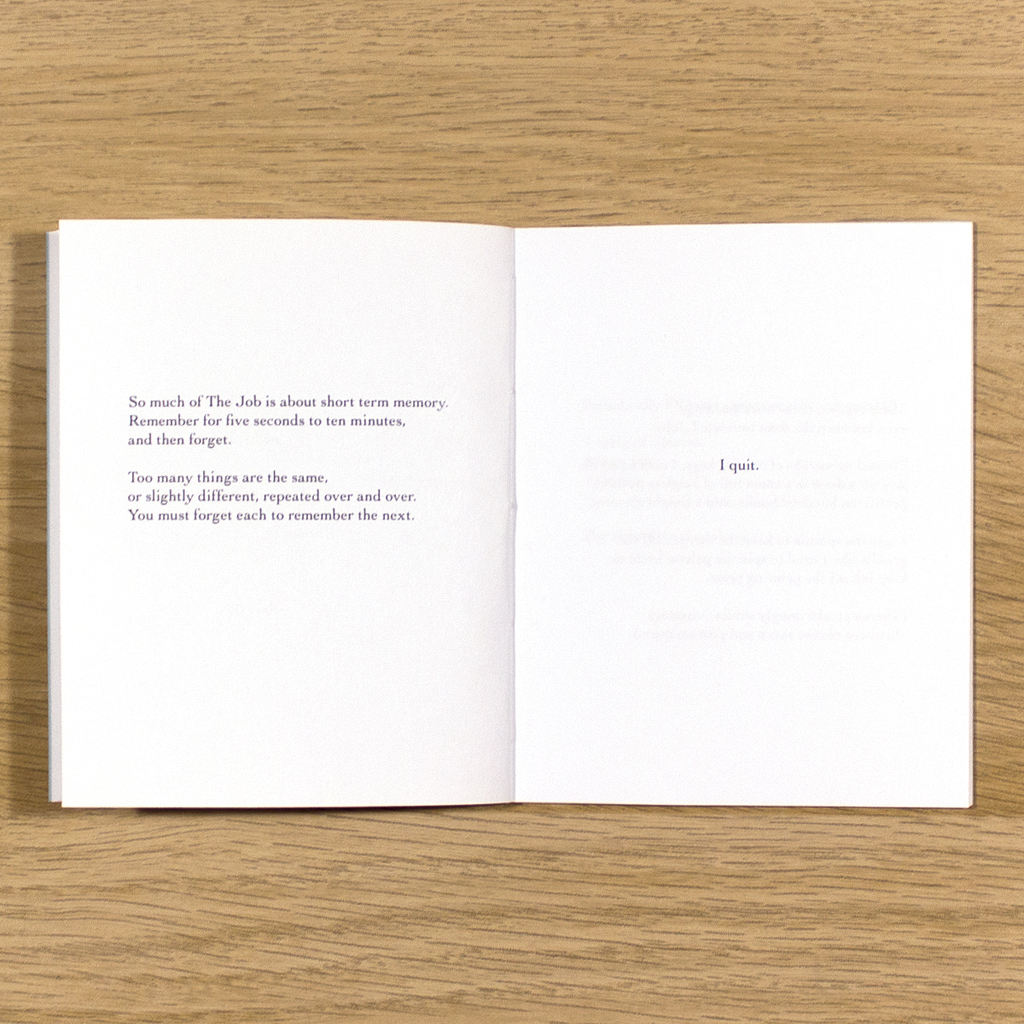
    The Job, inside spread 1

    Though it touches on political issues, The Job remains resolutely personal. The writing expresses a common sense solidarity with fellow food service workers (and a visceral resentment of those who profit off their work) that is more sympathetic than an ideological label. Even when Leslie uses insider slang, the specificity is relatable rather than exclusive. Many readers will have shared the experience of starting a new job and finding something funny or confusing, only to accept it and forget how weird it is until they quit or another new employee joins. In fact, the similarities among jobs – whether the author’s or the reader’s – is another powerful political point made implicitly through the observations in The Job.

    Fans of Leslie’s work will find plenty of continuity with previous pieces. Considered alongside his 2011 comic, The Adventures of Super Cafe Douche Bag Man, The Job shows the evolution of Leslie’s work-inspired art. Words and Vegetables (2017) shares its highly detailed introspective style. The organization of ideas, not quite stream of consciousness, is similar to Some Definitions of Vegetables (2019) and Parsely (2016), with which it also shares an emphasis on the visual arrangement of text on the page.

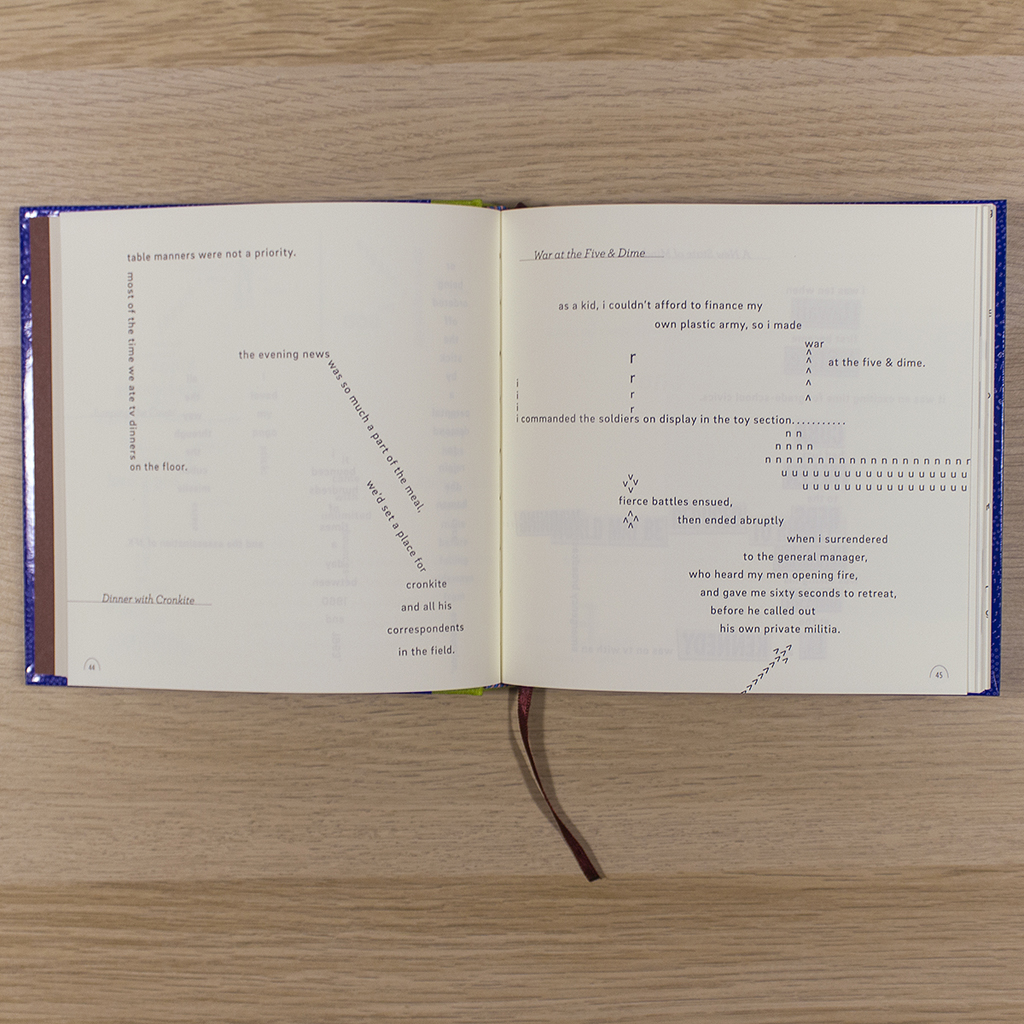
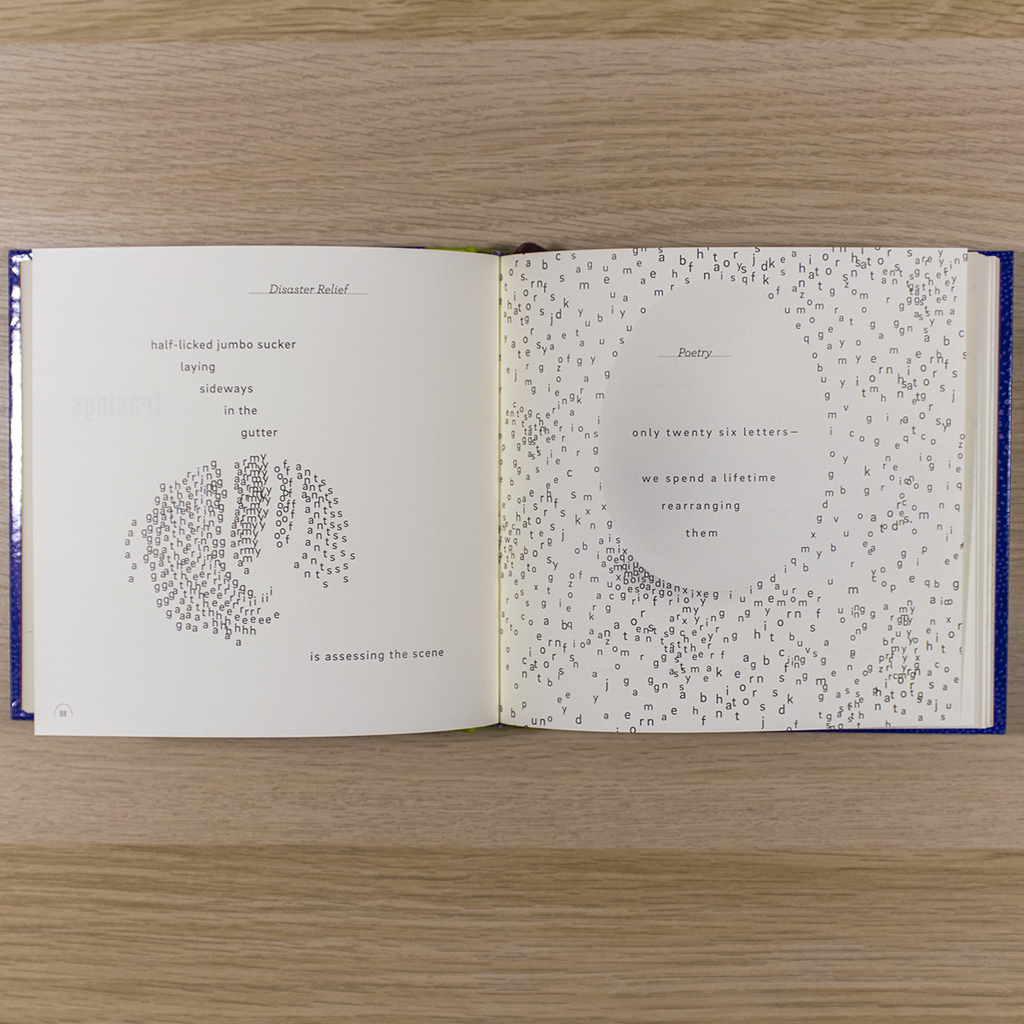
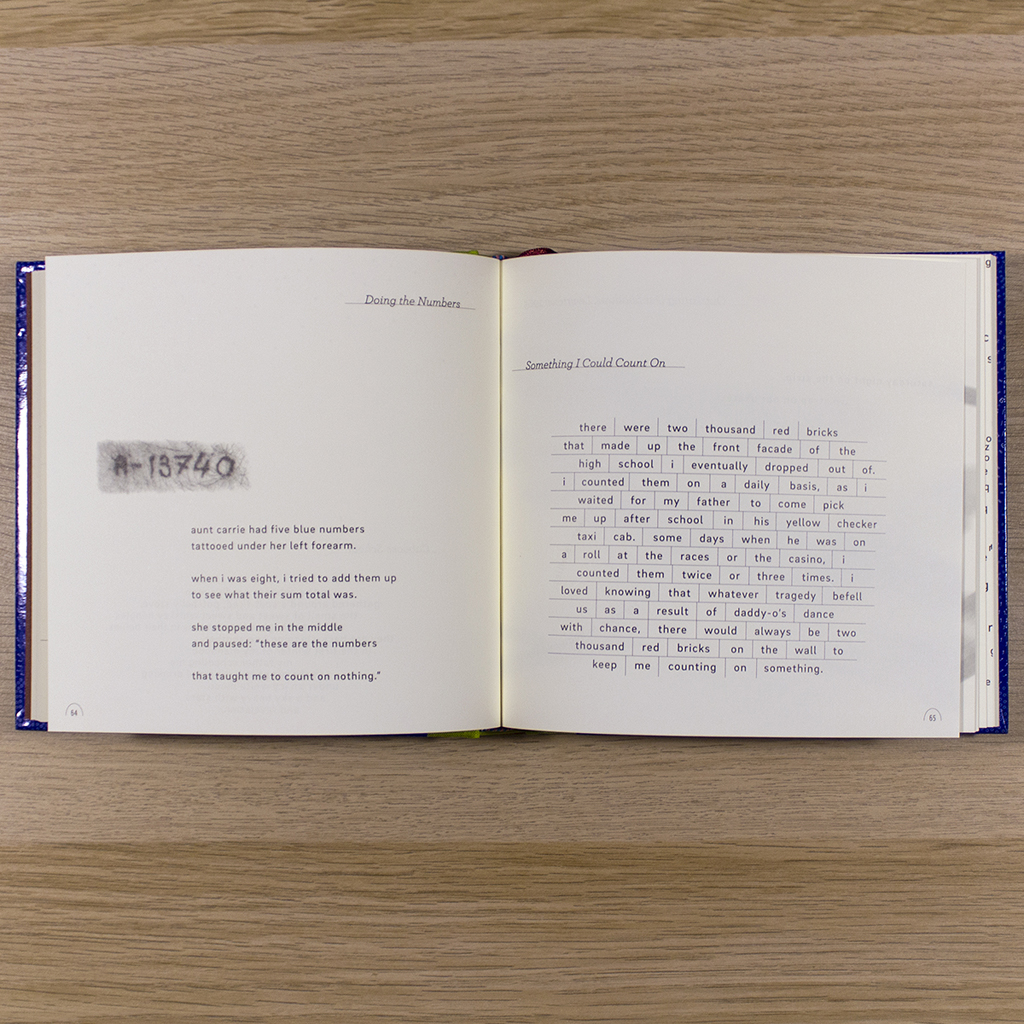
    The visual treatment of text in The Job is subtle, but it is enough to put this work of nonfiction into dialogue with visual poetry. In some passages, the text is treated as prose. Elsewhere, enjambment gives a more poetic feel to the few lines on a page. The conversation with visual poetry begins in earnest on the fourth spread, where a map of Leslie’s workplace is rendered on the recto. Interestingly, it’s not clear if the representation is spacial or temporal, or some psychogeographic mixture. This uncertainty is later complexified when the same layout is used to visualize Leslie’s body, mapping the aches and pains of restaurant work.

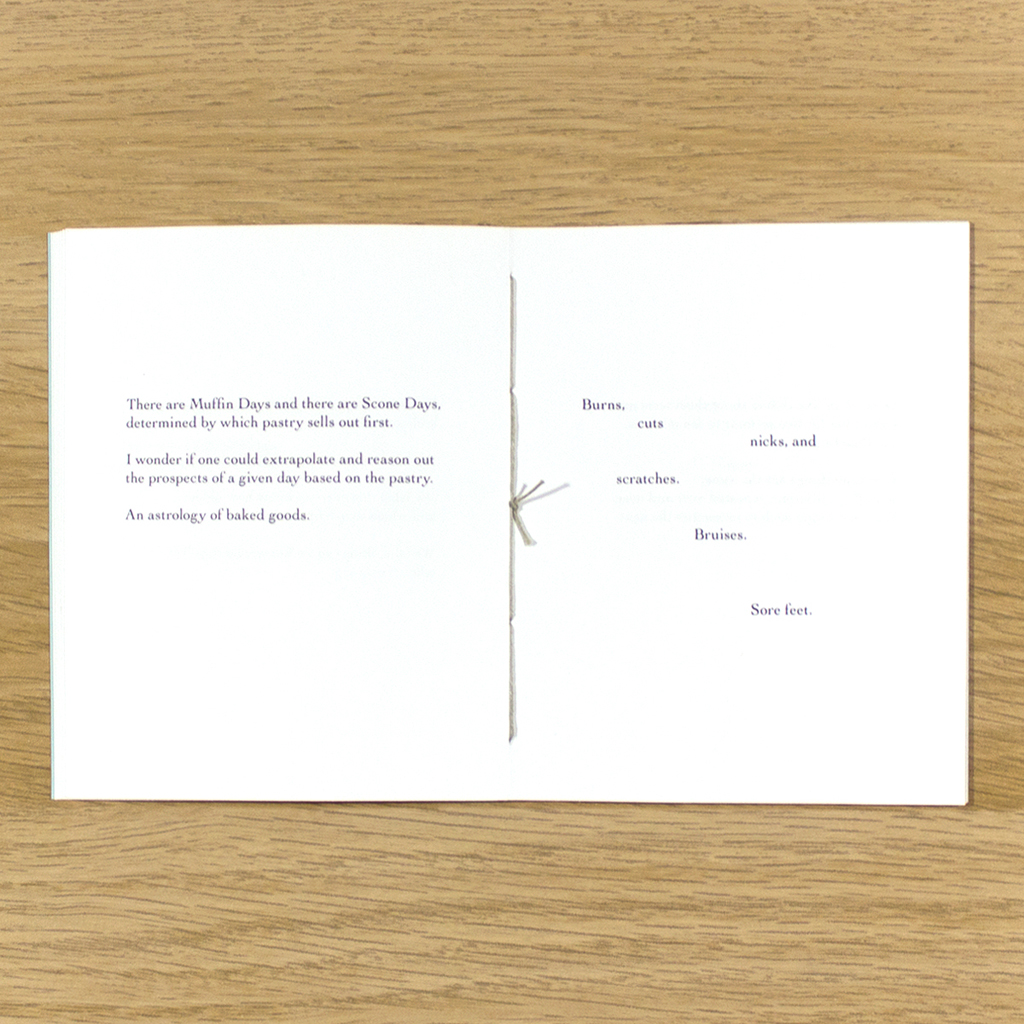
    As a text in the book form, The Job does more than visual poetry alone. On a basic level, layout on a page or a spread within a codex is different than, say, a broadside. For example, a recto that says only, “Waste.” has a different meaning than the same word with the same amount of white space around it on a broadside. The page is a unit, and the word uses (or perhaps wastes) the entire unit. A similarly sparse page bearing the phrase “I quit.” highlights other features of the codex. Has the author quit writing; are the subsequent pages blank? The way the turn of a page conceals and reveals adds to the impact of The Job – it would be a different piece outside the book form.

    Leslie also engages the codex as a mnemonic device. In the first half of the book, he writes:

    So much of The Job is about short term memory.
    Remember for five seconds to ten minutes,
    and then forget.
    Too many things are the same,
    or slightly different, repeated over and over.
    You must forget each to remember the next.

    The same text, with identical formatting, repeats in the second half of the book. The self-reflexive relationship between form and content tempts the reader to flip back to the first instance. Is the phrase the same or slightly different? The codex is ideal for this sort of non-linear access.

    Even with this short text, Leslie takes full advantage of these affordances to play with linear and cyclical progression throughout the book. The page as a temporal unit is disrupted to convey a quintessential experience of an unsatisfying job: the days are long, but the years are short. The opening page features the repeated phrase, “We set up the blocks, they knock them over.” Time crawls by, and the page ends with “Day after day.” Later in the book, Leslie ruminates on mopping:

    Leaves.
    Slush and salt.
    Mud.
    Grass.

    A whole year flies by, just like that. The stakes are raised as the pamphlet’s bulk shifts from the reader’s right hand to the left hand. Will the author escape The Job and focus on his creative work? Or will an earlier phrase repeat and place the reader back into the cyclical existence of wage labor? The suspense of each progressive revelation is heightened in the user-determined, time-based medium of the book.

    In fact, The Job’s successful marriage of form and content points to the historical role of the chapbook as a democratic form. Leslie is subverting the authority of the book to assert the importance of the personal and quotidian, but he is doing so within a long tradition. The Job is noteworthy for the ease with which book art, visual poetry and non-fiction meet and make meaning in a humble pamphlet. Perhaps it is a large idea in a tiny home.

    Levi Sherman

    April 15, 2019
    Review
    2019, Ink Jet, Large Home Tiny Idea, Laser, Memoir, non-fiction, Pamphlet, Pamphlet Stitch, Periodical, Poetry, Text, The Job, visual poetry, Woody Leslie
  • Welcome

    Below you’ll find the most recent artists’ book reviews and interviews. See the submissions page to find out how your book can be featured.

    Artists’ Book Reviews

    April 13, 2019
    Uncategorized
←Previous Page
1 … 8 9 10

    • Instagram
    • Mail
     

    Loading Comments...
     

      • Subscribe Subscribed
        • Artists’ Book Reviews
        • Join 78 other subscribers
        • Already have a WordPress.com account? Log in now.
        • Artists’ Book Reviews
        • Subscribe Subscribed
        • Sign up
        • Log in
        • Report this content
        • View site in Reader
        • Manage subscriptions
        • Collapse this bar